
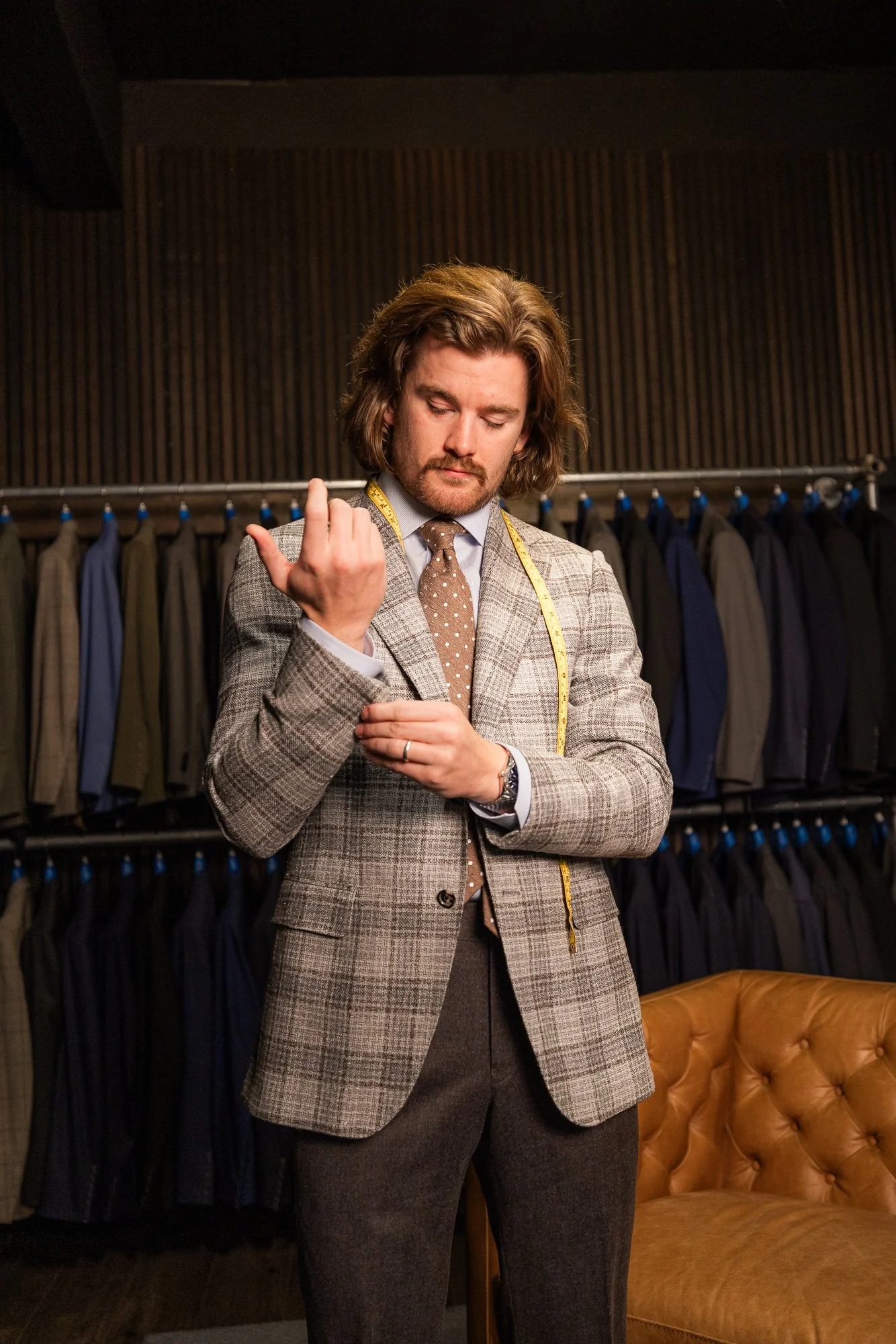
Why the Cut Matters More Than the Label
Shopping for a luxury suit by brand name alone is a reliable way to spend a great deal of money on something that doesn't quite work. Every major tailoring house operates around a distinct cutting philosophy—a house silhouette—that shapes how the jacket structures the chest, positions the shoulders, and moves with the body. That silhouette is built into every garment before a single fabric selection is made.
For men navigating the world of high end suit brands, this is the most important thing to understand upfront. A heavily structured Roman cut and a fluid, unstructured Milanese cut are fundamentally different garments. They suit different builds, different occasions, and different personal styles. Knowing which architecture aligns with your frame and lifestyle is what makes an investment in luxury tailoring actually pay off.
In that spirit, we wanted to provide a practical breakdown for four of the most significant names in Italian luxury suiting—what makes each house distinctive, who they tend to suit, and what to look for when evaluating them in person.
Brioni: The Roman Standard for Authority and Structure
Brioni was founded in Rome in 1945 by Nazareno Fonticoli and Gaetano Savini, and the house has a well-documented place in tailoring history—hosting what is widely recognized as the first men's fashion show in Florence in 1952. That historical positioning matters because it reflects an ongoing philosophy: Brioni has consistently built its identity around the formal authority of Roman tailoring, not the relaxed ease of the Milanese tradition.
The Brioni aesthetic, as the brand presents it, centers on intensive hand craftsmanship—the house describes a production process involving over 200 stages of work on each garment. These brand claims are consistent with what's visible in their finished products: jackets with real structural memory, built to hold their shape through extended wear.
In terms of silhouette, Brioni suits are generally characterized by a squared, lightly padded shoulder and a formal, upright chest line—a style interpretation that reads as authoritative and commanding. This isn't objective fact so much as the house's consistent design identity, but it's a reliable read across their core lines. It tends to reward broader, executive builds; on leaner frames, the structure can feel imposing rather than enhancing.
Tom Ford: Neo-Classical Drama with Modern Precision
Tom Ford suits are widely associated with a bold, high-contrast silhouette that draws stylistic comparisons to 1970s British tailoring, an observation that appears consistently in their work. The aesthetic hallmarks are recognizable: wide lapels often executed in a peak configuration, a structured shoulder, a suppressed waist, and an extended jacket length that favors a dramatic silhouette.
The craftsmanship details that ground this dramatic design in genuine luxury vary by garment and collection, but Tom Ford's higher-end lines are known for meticulous finishing work—hand-worked buttonholes, precise pocket proportions, and quality canvas construction.
Among high end suit brands, Tom Ford is the natural reference for men dressing for evening events, galas, or any occasion where a strong style statement is the point. The silhouette performs best on athletic and slender builds where the deep waist suppression and structured shoulder have the geometry to work with. For Park City social events and Sundance-adjacent occasions, it's a compelling choice with the right frame.
Zegna: Technical Innovation at the Fiber Level
Zegna's brand story is meaningfully different from most luxury tailoring houses because it begins with fabric, not tailoring. The company has long emphasized vertical integration across its supply chain—from wool sourcing through to the finished garment—and that integration is what enables its proprietary textile development. Trofeo is a well-established Zegna fabric line; the brand's broader investment in performance-oriented wool development is a genuine differentiator.
The house silhouette has moved decisively toward clean minimalism—soft natural shoulders, relaxed waistlines, and unstructured or lightly canvassed interiors that allow the fabric's quality to carry the visual weight. The result is a suit that feels almost effortless to wear, conforming to movement rather than imposing shape onto the body.
For active executives who travel frequently or move between business environments and Northern Utah's outdoor lifestyle, Zegna suits address a practical problem: maintaining a polished appearance that can keep pace with a demanding schedule. Among Italian luxury suits, Zegna is where performance-oriented textile development and traditional heritage meet most directly.
Canali: The Case for Balanced Italian Versatility
Canali has been producing tailored menswear since 1934, and the house has built its reputation on a specific proposition: the luxury suit designed for range rather than occasion. The house profile—fluid, soft-shouldered construction with generous sleeve heads and a comfortable fit—is broadly consistent across their core lines, though construction specifics vary by collection and price tier, as they do across most major houses.
Canali's better lines use canvassed construction, and the property of a well-canvassed jacket gradually conforming to the wearer over time is a general characteristic of quality tailoring rather than something unique to Canali specifically. What the brand does reliably well is translate that craft tradition into a versatile, approachable silhouette—refined without being dramatic, polished without being stiff.
Among the high end suit brands covered here, Canali is the most natural starting point for men building a working wardrobe rather than a collection. It handles daily professional wear, upscale social events, and the transitions between them without requiring a deliberate adjustment in how you carry it.
Comparing the Houses: A Practical Reference
The four houses above represent meaningfully different approaches to luxury tailoring. Here’s a helpful breakdown of the differences in style characterizations and general design tendencies.

What's Happening Inside the Jacket: Canvas and Lining
The visible differences between these houses—shoulder shape, lapel width, silhouette—are the starting point for comparison. The more durable distinctions are internal.
Full canvas construction means a layer of natural haircloth runs from the shoulder to the jacket hem, hand-stitched and floating freely between the outer fabric and the lining. This layer responds to body heat, humidity, and movement, gradually adapting to the wearer's specific frame. It's what gives a well-maintained high end suit its "second skin" quality after a year of regular wear, and it's what mass-market fusing can’t replicate. Fused interlinings bond chemically and begin degrading with cleaning and temperature cycling. Canvas ages in the opposite direction. They don’t hold up.
Lining choices follow the same logic. Natural cupro, Bemberg, or silk linings are breathable, smooth against the shirt, and allow the jacket to move without catching. Synthetic linings trap heat and create friction, which is immediately noticeable in Northern Utah's drier climate where static and warmth are already factors. Every house profiled here uses natural linings as standard on their primary lines. It's a baseline expectation, not a premium upgrade.
The Heritage Argument for Italian Luxury Suits
The enduring global standing of these tailoring houses comes down to one thing: production methods that have been refined across multiple generations and haven't been shortcut for margin. Italian luxury suits carry a specific craft tradition—sprezzatura is the shorthand for it—an effortless quality that makes a structured garment feel like a natural extension of the person wearing it rather than something imposed on them.
That quality has practical implications for the Northern Utah lifestyle. Premium merino wools, cashmeres, and silk blends regulate temperature well in dry, high-altitude environments. They breathe where synthetics trap, and they press cleanly after travel. A garment built to these standards functions better in the specific conditions of the Wasatch Front than a technically comparable but lesser-made alternative.
Investing in Italian luxury suits is, at its core, a long-term decision. The right garment from any of these houses, properly cared for, compounds in value over years of wear—improving in fit, deepening in character, and remaining relevant across changing professional contexts.
Evaluating High End Suit Brands in Person: What to Look For
Reading about house cuts is useful preparation. Trying them on is the only way to know. When evaluating high end suit brands with a clothier, a few specific things are worth paying attention to beyond general fit impression:
· shoulder seam placement: it should sit exactly at the shoulder's edge, not rolling forward or back
· collar gap: no daylight between the jacket collar and shirt collar when standing naturally
· chest pull: the front should lie flat with no horizontal pulling across the button
· sleeve pitch: the sleeve should hang forward naturally, matching the arm's resting position
· waist suppression: visible shaping, but not so tight that the front button strains
· trouser break: personal preference, but worth deciding before leaving the consultation
A skilled clothier will walk through each of these points and identify what adjustments are achievable versus what's a fundamental mismatch between house cut and body type. That conversation is the real value of a local consultation over ordering blind—and it's what separates building a wardrobe from accumulating expensive clothes.
Finding the Right High End Suit Brand for Your Build and Lifestyle
The practical takeaway from comparing these houses is simple: there's no objectively best option among high end suit brands. There's only the cut that fits your frame, suits your occasions, and matches how you actually live.
Brioni for presence and formal authority. Tom Ford for drama and occasion dressing. Zegna for technical performance and modern minimalism. Canali for versatile, everyday Italian luxury. Each house has a clear identity—and the right one is the one whose architectural philosophy aligns with yours, properly fitted by someone who understands both the garment and the person wearing it.
For men in Salt Lake City, Park City, and the surrounding communities, working with a boutique that can source across these houses makes that comparison possible in person before committing. The label matters less than the cut, the cut matters less than the fit, and the fit matters less than whether the garment works for the life you're actually living.