
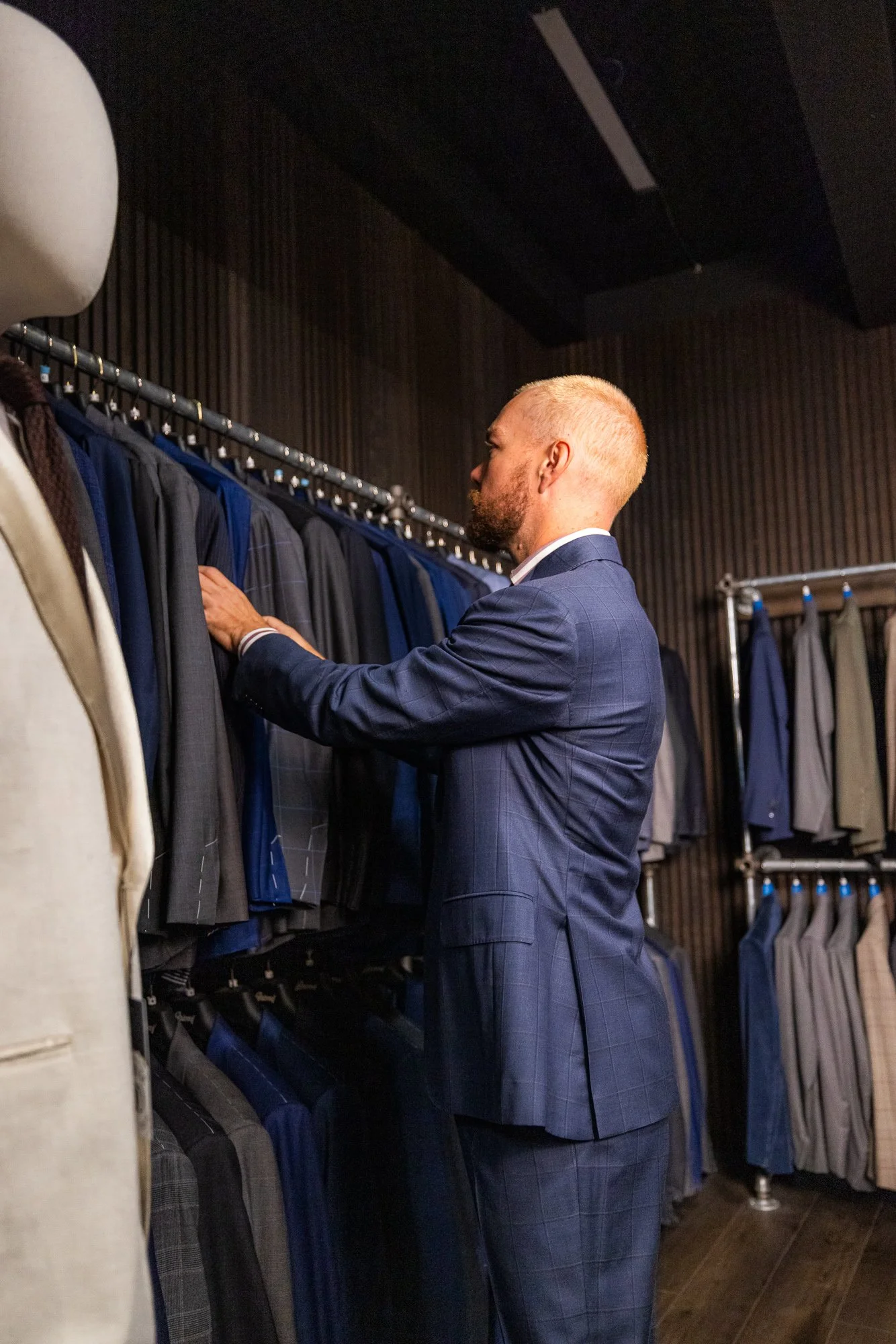
There’s a difference between a suit that fits and one that genuinely works. In the first few seconds, both can look fine. The jacket buttons, the trousers break at the shoe, and the mirror offers no complaint. But wear either one through a full day and you’ll know which is which. A well-made suit just settles in — through meetings, errands, dinner reservations, all of it. The other one keeps asking for small corrections: a sleeve tugged back into place, a collar lifted at the neck, a waist shifted after one too many hours in a chair.
For men in Northern Utah, that gap has real consequences. This region asks a lot from a wardrobe. A single workday might start in a Salt Lake City office, move through a cold parking structure, continue into a lunch meeting, and finish at an evening event where the room is warmer and the dress code slightly more relaxed. Clothing that only works in one context reveals its limitations fast. That’s exactly where the difference between off-the-rack and custom suits starts to matter.
Most conversations about this topic get reduced to price, as if the only reason to buy custom suits is to signal that you spent more money. That’s not really what’s going on. The actual distinction is about process, structure, and how the garment performs over time. Off-the-rack clothing is designed around averages. Custom suits are designed around a specific person. That shift — while it might sound subtle — changes nearly everything: how the garment drapes, how it moves with your body, how long it holds its shape, and how confidently you can wear it through real situations instead of ideal ones.
What Defines Custom Suits
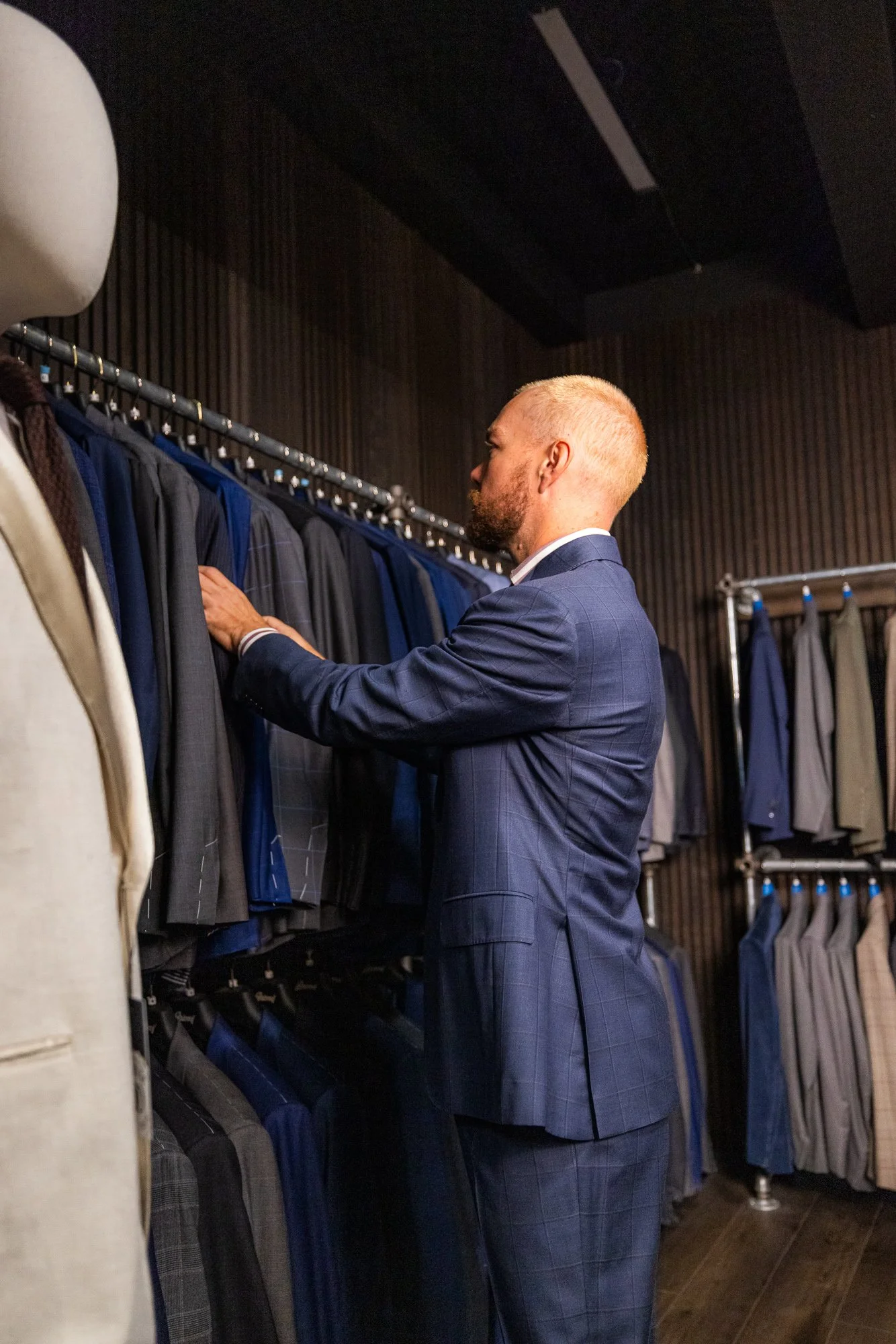
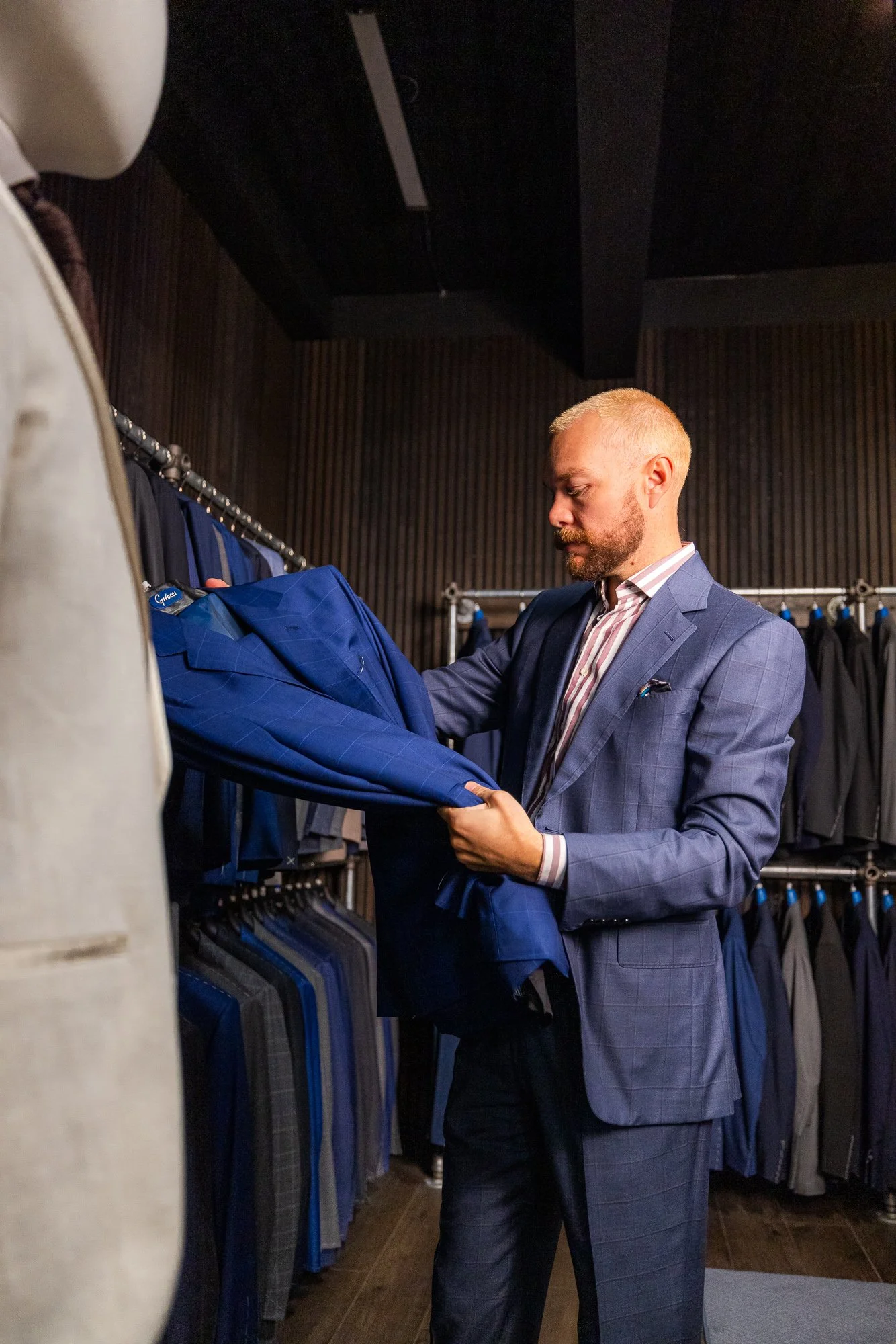
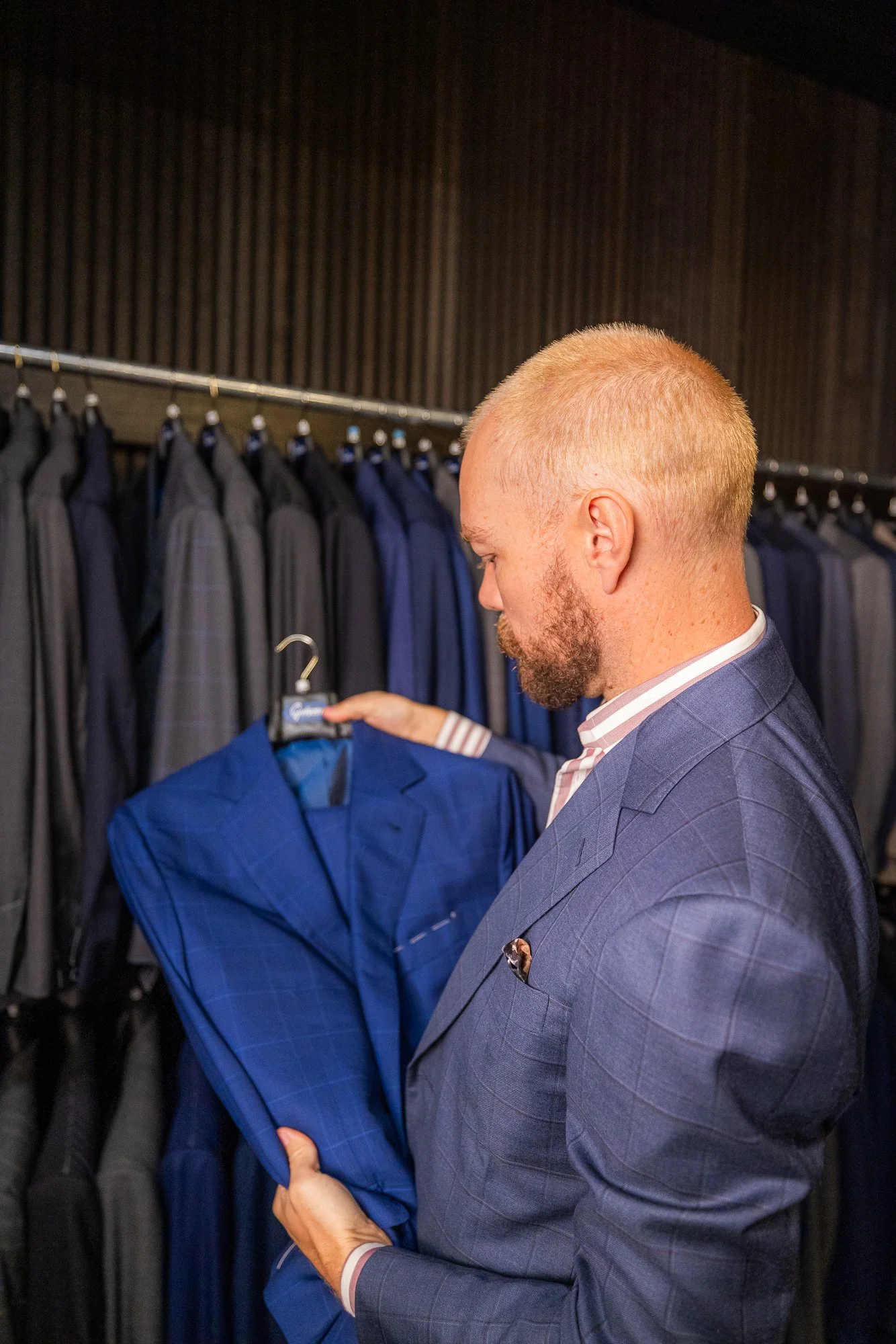
Custom suits start with the individual — but not in the simplified sense of running a tape measure around your chest and calling it done. Good custom clothing begins with interpretation. A skilled tailor is going to notice things a measuring tape won’t tell them: whether one shoulder sits slightly lower than the other, whether you carry yourself upright or lean forward a little, whether your seat needs extra room, whether your torso is long enough that the jacket length needs to compensate. The measurements themselves are just a starting point. Proportions are where the real work happens.
This is the central difference from how retail clothing works. A manufacturer builds a pattern around broad averages, grades it into different sizes, and the customer picks whichever approximation comes closest — then hopes alterations can close the gap. Sometimes they can. Often they can’t. A standard size might fit well through the chest but pinch at the armhole. It might hang cleanly across the back while pulling too tight through the seat. The numbers on the tag can look right and the garment can still feel subtly wrong every time you wear it.
With custom suits, the process runs the other direction. The pattern is drafted or adjusted around your specific frame, so by the time the finished garment arrives, it’s already oriented to your body. That’s why truly good tailoring rarely announces itself. It doesn’t need to. It simply looks calm, balanced, and right — because the structure underneath the cloth was built with a specific person in mind.
Why Off-the-Rack Works Until It Doesn't
Off-the-rack suits aren’t without their advantages — let’s be fair about that. They’re immediate, familiar, and widely available. You can walk into a store, try on a few jackets, pick the most forgiving option, and walk out with something wearable. For occasional wear, last-minute needs, or situations where you just need a suit on the rack in the right size, that convenience is real. It would be dishonest to dismiss it.
The issue isn’t that off-the-rack suits are bad. It’s that they’re solving a different problem. Their purpose is scale — they have to fit enough people well enough to justify mass production. To do that, every garment has to make assumptions: about your posture, shoulder angle, rise, sleeve pitch, body proportions. When you happen to match those assumptions closely, the result can be quite good. When you don’t — and most people don’t in every dimension — even a decent garment can feel slightly restless all day.
Those compromises get louder with frequent use. A jacket that seemed fine in the fitting room starts pulling across the back by lunchtime. Trousers that looked clean when you were standing collapse or twist after a few hours of sitting and walking. In Northern Utah, where most men need a suit to move across professional, social, and seasonal settings without missing a beat, small irritations don’t stay small. They turn into the difference between wearing the garment and managing it all day long.
Custom Suits and Fabric Selection
Fabric is where this conversation gets more personal. Retail suiting typically offers a fairly narrow range of safe, broadly marketable options — cloths chosen to satisfy as many customers as possible, which usually means moderate weights, familiar colors, and constructions built more for inventory predictability than for any individual wearer’s actual life.
Custom suits let you choose fabric with your actual life in mind — and in Northern Utah, that matters. Climate here isn’t a background detail. Winters are dry and cold, summers run bright and warm, and the gap between an outdoor parking lot and a heated conference room can be significant. A heavier worsted brings welcome structure and body through the colder months. A lighter high-twist wool or a tropical weave becomes the smarter call once temperatures rise. A mohair blend can resist wrinkles well — useful for anyone who commutes or travels regularly. A soft flannel works beautifully for a wardrobe that leans more seasonal and textured.
This is a practical benefit that often gets overlooked. Choosing cloth intentionally isn’t indulgence — it changes how often you reach for the suit, how comfortable you feel in it, and how well it keeps its shape by late afternoon. A suit built for your schedule and climate earns its place in your wardrobe far more easily than one you bought because it was hanging there in your size.
Tailored Suits for Men and the Hidden Structure
A lot of what makes a suit great is invisible. The outer cloth gets most of the attention, but a jacket’s real character is determined by what’s underneath it. This is where tailored suits for men often separate most clearly from standard retail options — and where the difference is easiest to overlook until it’s too late.
Most entry-level and mid-range off-the-rack jackets use fused construction. The internal layers are bonded together with adhesive — it keeps production costs down and speeds up manufacturing. Fresh off the rack, the results can look perfectly fine. But adhesive has a lifespan. Repeated wear, dry cleaning, and exposure to heat gradually expose its limits. The chest starts to bubble. The lapel stiffens. The whole front flattens out in a way that can’t really be reversed.
Better tailored suits for men use canvas construction instead — or some variation of it. A layer of natural material sits inside the jacket, helping shape the chest and lapel while still letting the garment move with the body. This isn’t just a romantic nod to old-world craft. Canvas construction genuinely affects breathability, drape, and how long the jacket holds its shape. More importantly, it allows the suit to break in with you over time rather than slowly losing its structure. A good jacket shouldn’t just survive regular wear — it should actually start feeling more like yours because of it.
Fit Is Really About Movement
Most people judge fit in static terms, because static moments are easy to evaluate. The jacket buttons or it doesn’t. The trouser hem hits the shoe or it doesn’t. But fit only tells its full story when you’re moving. A suit has to work while you’re walking, reaching across a table, settling into a chair, getting in and out of a car, standing up to shake someone’s hand. A garment that looks right only when you’re standing still in front of a mirror hasn’t done the whole job.
Custom suits address this by thinking about balance, not just measurements. The sleeve pitch can be adjusted to match the natural angle your arms hang at rest. The armhole can be shaped for cleaner movement without pulling. The trouser rise can be set where your body is actually comfortable, not where the pattern assumed you’d be. These are small decisions in the drafting stage that add up to a noticeably different experience by the end of a long day.
That matters for anyone with a varied schedule, but especially for men who wear suiting as actual work clothing rather than for occasional ceremony. When the jacket fights your shoulders, you feel it all day. When the trousers shift every time you sit down, it compounds. Good tailoring removes that background friction. The suit stops demanding your attention, and you can focus on whatever you actually showed up to do.
The Suit and Tailor Relationship
There’s a reason the phrase “suit and tailor” still carries weight. It points to something beyond a one-time purchase. A genuine working relationship between you and a men’s suit tailor turns clothing into an ongoing process of refinement rather than a sequence of disconnected decisions.
The first commission establishes a foundation. Yes, measurements get recorded — but so do the preferences that measurements can’t capture. How much structure you like in the shoulder. Whether you prefer a cleaner trouser line or a slightly fuller drape. How sharp or relaxed the overall silhouette should feel given what you do for work. A skilled men’s suit tailor picks up on these things and carries them forward into every garment that follows.
That kind of continuity is hard to replicate through retail. A salesperson can help you find your size. An alterations specialist can tighten the edges. But the relationship between a suit and tailor creates something different — a kind of institutional memory built into the process itself. Each new garment benefits from what the last one revealed. Over time, the guesswork decreases, the decisions get sharper, and the wardrobe starts feeling like a coherent whole rather than a collection of compromises.
Where a Customizable Suit Becomes Practical
“Customizable suit” can sound like marketing language until you ground it in actual use. In practice, it matters because men don’t all need the same garment for the same reasons. One professional might need something polished enough for client-facing work but durable enough to hold up through regular travel. Another might want a suit that transitions cleanly between church, weddings, and business dinners. A third might simply want a jacket that looks sharp without feeling overbuilt in warmer weather. Those are different suits, even if they look similar on a hanger.
Going through the custom suit process lets those priorities actually shape the outcome. Lapel width, pocket style, lining, fabric weight, button stance, trouser details, construction method — all of it can be considered with a specific purpose in mind. The value isn’t in having a long list of options for its own sake. It’s that the finished garment ends up simpler, more focused, and more dependable because it was designed around a real role in your wardrobe rather than a theoretical average wearer.
In that sense, going through a thoughtful custom suit process often yields something more practical than the supposedly universal off-the-rack option. Instead of asking one generic garment to do everything adequately, you end up with a suit that has a clear purpose — and still has enough range to feel flexible day to day. That specificity tends to produce more use, not less.
Longevity, Cost, and Real Value
Most people compare prices before they compare lifespans. That’s understandable — price is immediate and concrete. But focusing there can distort the picture. Off-the-rack suits typically cost less upfront, yet they’re also more likely to show their limitations early — through shape loss, construction fatigue, or simply the fact that a suit that doesn’t fit quite right tends to get worn less.
Custom suits require more investment upfront because better cloth, stronger construction, and individualized labor all cost more — there’s no getting around that. But the investment changes the ownership experience. A suit that holds its structure, adapts to your body over time, and stays comfortable year after year isn’t just a nicer object. It’s a garment with a lower cost of frustration and, usually, a lower cost per wear once you do the math over its full life.
Proper care still plays a role, of course. Brushing the cloth after wear, letting the suit rest between uses, hanging it properly, and avoiding unnecessary dry cleaning will extend the life of any garment. The difference is that a well-made suit rewards that attention more fully. Strong construction preserves the return on good care. Weak construction often doesn’t, no matter how carefully you treat it.
Why Custom Suits Still Matter
Ready-to-wear clothing has genuinely improved. Many off-the-rack garments today are better than what was available a decade ago, and that’s worth acknowledging honestly. But improvement in retail doesn’t answer the question that custom suits are built to answer. They exist for a different purpose.
The question isn’t whether a suit can look acceptable for one occasion. It’s whether it can support you consistently across real life: through changing temperatures, through long workdays, through repeated use, through situations where your confidence depends partly on how little energy you’re spending correcting the clothes on your back. That’s where custom suits continue to justify themselves.
For men throughout Northern Utah, the appeal isn’t really about extravagance. It’s about clarity. A suit that’s been chosen well, cut well, and built well removes friction from your day. It settles into your life instead of interrupting it. That’s the difference that actually matters — and it’s why custom suits keep their place even in a world full of faster, easier options.