
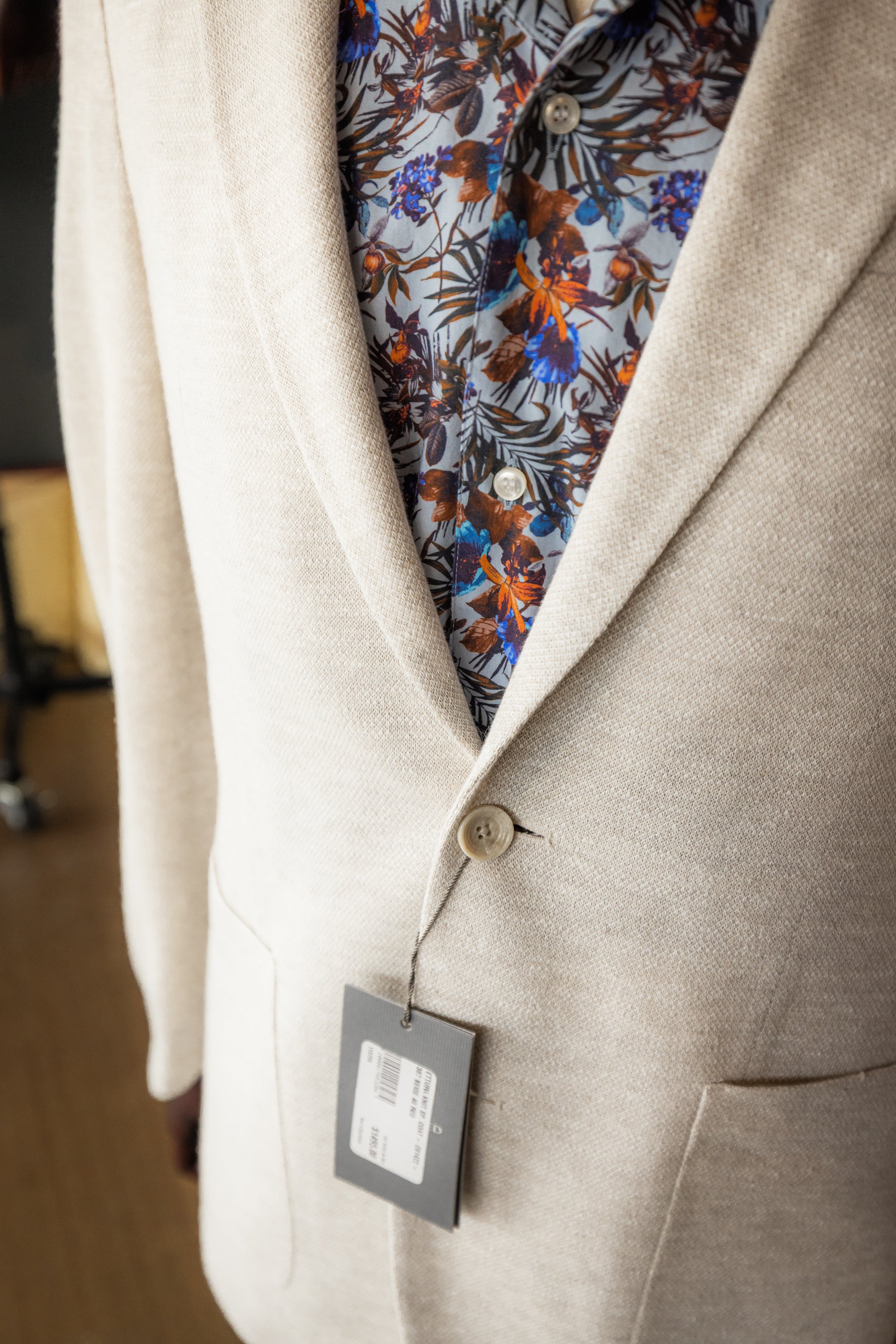
A new suit rarely feels like its best version of itself.
It might look sharp in the mirror the day you pick it up. The lines are clean, the fabric still carries that crisp, pressed structure, and everything sits exactly where it was shaped to. But wear it for a full day, then another, then a week or two, and something begins to change. The suit doesn’t deteriorate—it settles.
That shift is easy to miss if you’re not paying attention. Most people think of clothing in terms of wear and tear, as if every use moves it closer to being worn out. With quality suits, the opposite is often true in the early stages. The garment starts to adapt to the person wearing it. The stiffness eases, the fabric begins to move differently, and the structure starts to reflect how it’s actually used rather than how it was originally pressed.
That process is what can be thought of as the break-in period. It’s not dramatic, and it doesn’t happen all at once, but it plays a significant role in how a suit ultimately looks and feels over time.
What the Break-In Period Actually Is
The idea of a break-in period usually gets associated with shoes or raw denim—things that visibly change shape with wear. Suits don’t announce the process in the same way, but they go through something similar.
When a suit is new, everything about it is set in its most controlled state. The fabric has been pressed into place, the internal structure is firm, and the seams are holding their intended shape. It’s a version of the garment that reflects how it was made, not how it will be worn.
As you begin to wear it, those elements start to respond to movement. The chest softens slightly, the sleeves begin to follow the natural angle of your arms, and the trousers start to sit more naturally with your stride and posture. None of this changes the design of the suit, but it changes how that design expresses itself in daily use.
That’s the difference between a suit that looks new and one that feels lived in, in the best possible sense.
Why Quality Matters More Over Time
Not every suit improves with wear. In fact, many don’t.
Lower-quality construction often relies on adhesives and simplified internal structures that don’t respond well to repeated use. Instead of softening and adapting, they begin to break down. The fabric may lose its shape, the front of the jacket can develop bubbling, and the overall silhouette starts to flatten.
With higher-quality suits, the process moves in a different direction. Canvas construction allows the jacket to mold more naturally over time, working with the body rather than resisting it. The fabric itself, if it’s well-made, has enough resilience to relax without losing its integrity.
This is where the idea of quality suits becomes practical rather than abstract. It’s not just about how something looks when it’s new. It’s about how it behaves after months or years of wear, and whether that behavior improves or degrades the experience.
How Fabric Changes With Wear
Fabric is one of the first things to show subtle signs of a suit settling in. At the beginning, many fabrics carry a certain stiffness from pressing and finishing. Over time, that stiffness relaxes. The cloth begins to drape more naturally, responding to movement rather than holding a fixed shape.
Wool, in particular, has a kind of memory. It can be shaped with heat and steam, but it also responds to regular wear. Areas that move frequently—like the elbows, knees, and seat—develop a slightly different character. They don’t necessarily look worn, but they begin to reflect how the suit is used.
This isn’t a flaw. It’s part of what gives a well-worn suit its depth. The fabric starts to look less like something fresh off a rack and more like something that belongs to the person wearing it.
How the Jacket Settles
The jacket goes through its own version of this process—when it’s new, the chest and lapels are often at their most structured. They hold a defined shape that reflects the work done during construction. As the suit is worn, that structure softens slightly, allowing the jacket to follow the natural lines of the body more closely.
The shoulders begin to feel less rigid, the lapels roll more naturally, and the overall shape becomes less forced. None of this means the jacket loses its form. Instead, it becomes more comfortable without sacrificing its structure.
This is where the difference between fused and canvassed construction becomes especially noticeable. A fused jacket tends to maintain its initial stiffness until it starts to break down, while a canvassed jacket evolves more gradually, maintaining its integrity while becoming easier to wear.
The Trousers and Daily Wear
Trousers change in different ways because they experience more constant movement. This means the break-in process can be more noticeable. The fabric begins to relax around the seat and thighs, allowing for more natural movement. Creases soften slightly between pressings, and the way the trousers fall begins to align more closely with how you actually move.
Fit plays a role here as well. A properly fitted pair of trousers will settle into a comfortable position over time, while one that’s slightly off may start to reveal its issues more clearly. The break-in period doesn’t fix poor fit—it tends to highlight it.
When everything is right, though, the trousers become easier to wear. They stop feeling like something you have to adjust and start behaving like something that simply works.
The Role of Rotation and Rest
One of the most overlooked aspects of how long a suit lasts is how it’s worn between uses. Wearing the same suit every day doesn’t allow it time to recover. Fabric needs time to release moisture, relax from movement, and return to its natural state.
Without that rest, even high-quality suits can start to show fatigue more quickly. Rotating between suits allows each one to maintain its structure and extend its lifespan. It also supports the break-in process by giving the garment time to settle gradually rather than being pushed constantly.
This is where simple suit care tips become important. Hanging the suit properly, allowing it to air out, and brushing it occasionally all contribute to how well it holds up over time.
Maintenance Without Interference
There’s a balance to be found in how to maintain a suit during its break-in period. Too much intervention—frequent dry cleaning, excessive pressing—can interrupt the natural settling process. It keeps the suit in a constantly reset state, preventing it from developing that lived-in ease.
Too little care, on the other hand, can allow dirt and wear to build up in ways that damage the fabric.
The goal is to support the suit without over-managing it. Spot cleaning when necessary, brushing to remove surface debris, and using steam to relax wrinkles can go a long way without interfering with how the garment evolves. Over time, these small habits contribute to both how the suit looks and how long it lasts.
Northern Utah Environmental Impact
Dry air, temperature shifts, and frequent movement between indoor and outdoor spaces all influence how a suit wears in. This is where the Northern Utah climate becomes something to seriously consider. Fabric may dry more quickly, static can become more noticeable, and transitions between environments can affect how the garment holds its shape throughout the day.
A suit that adapts well to these conditions tends to be one that was built with both quality and practicality in mind. The break-in period, in this context, isn’t just about the garment adjusting to the wearer. It’s also about how it responds to the environment it’s regularly exposed to.
That interaction becomes part of the suit’s character over time.
How Long Does a Suit Last
This question doesn’t have a single answer, but the break-in period plays a role in it. A suit that never moves beyond its initial state—either because it’s over-maintained or poorly constructed—won’t develop the same longevity as one that’s allowed to settle properly.
The early stages of wear set the tone for how the garment will perform in the long run. Quality suits that are worn thoughtfully and maintained with care can last for years, sometimes much longer. The fabric retains its integrity, the structure holds, and the suit continues to look and feel appropriate even as it ages.
Lower-quality suits often show their limits much sooner. Instead of evolving, they decline. The difference becomes more apparent with time.
What You Start to Notice
After a few weeks or months of wear, the changes become easier to recognize.
The jacket feels more natural when you put it on. The trousers sit without needing adjustment. The fabric moves with you rather than against you. These are small shifts, but they add up to a noticeably different experience.
This is the point where the suit starts to feel like it belongs to you rather than something you’re borrowing for the day.
It’s also the point where the value of good construction and material becomes clear. The improvements aren’t dramatic, but they’re consistent.
The Broken-In Suit
A suit’s best version isn’t always the one you see on the first day. The break-in period allows the garment to move beyond its initial structure and settle into something more natural.
Fabric relaxes, construction adapts, and the overall feel becomes more aligned with how the suit is actually worn. Understanding how long a suit lasts means looking at this process as part of its lifespan rather than something separate from it. The early stages of wear shape what the suit becomes over time.
With the right balance of use and care, a quality suit doesn’t just hold up. It improves, gradually and quietly, until it becomes something that fits not just in measurement, but in experience.