
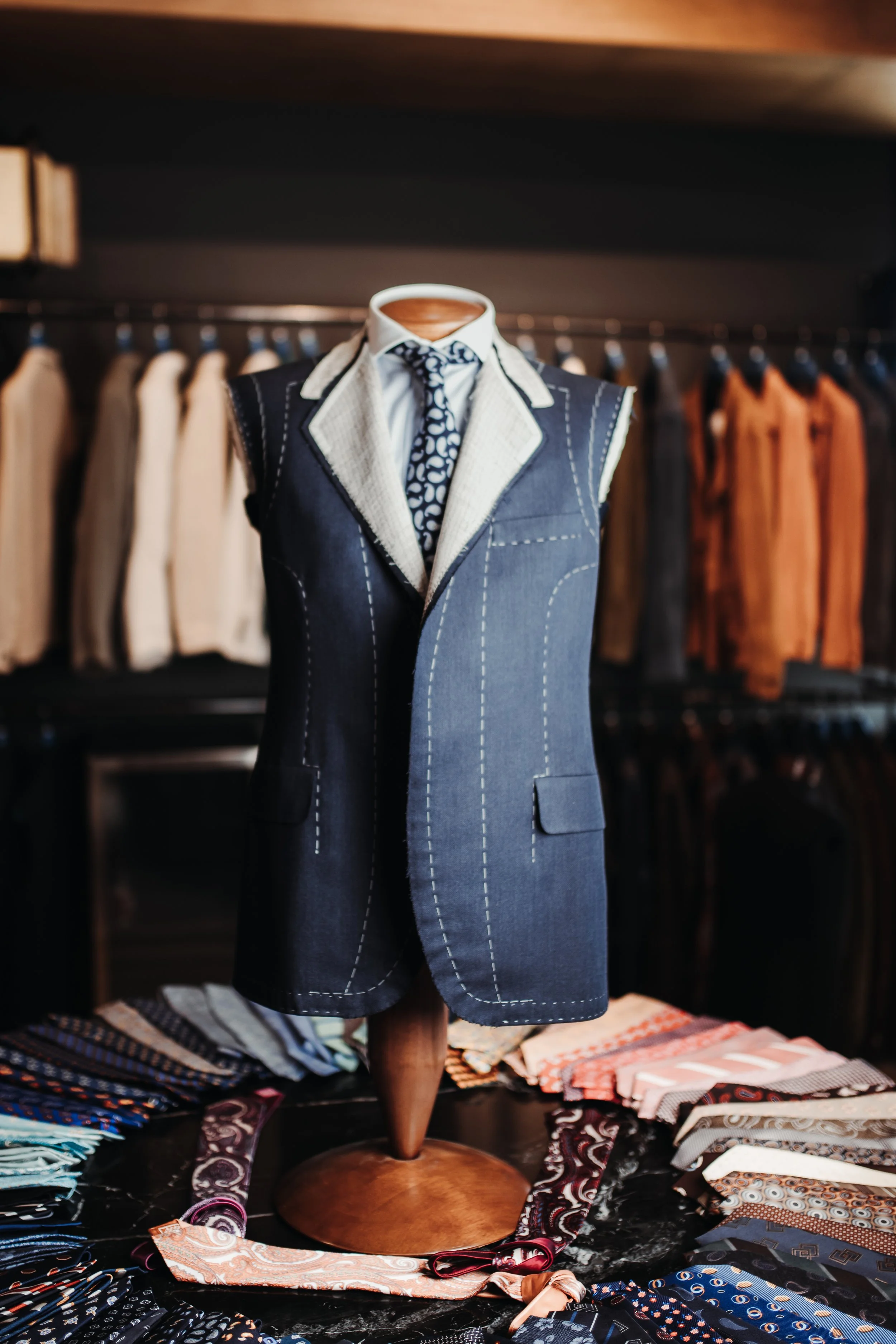
The suit introduces you; the details tell your story.
A great suit does more than fit the body—it frames a man's intent. But what happens after the handshake, when the fabric's story has been told? The answer lives in the details: the watch that punctuates movement, the pen that turns thought into permanence, the scent that lingers after you've gone. These are the style essentials that transform tailoring into character, the small decisions that separate someone who's dressed well from someone who understands what that means. The modern man's men's accessories aren't merely adornment—they're the vocabulary of presence, the finishing sentences in a larger conversation about who you are and how you move through the world.
The Conversation of Accessories
Tailoring sets the tone; accessories define the melody. Every item chosen has a voice in the ensemble—some barely whisper, others hum just loud enough to be noticed. Together, they create the harmony of a life lived with intention, where nothing is accidental and everything serves a purpose beyond function.
The modern world has diluted formality without erasing the need for presence. A well-cut suit still signals respect, competence, and attention to detail, but the supporting cast—watch, pen, fragrance, and the pieces carried in daily rhythm—reveals what lies beneath the surface. When each of these elements works in concert, they create something no trend can replicate and no algorithm can curate: a personal signature that feels earned rather than assembled. It's the difference between looking the part and embodying it.

The Watch: The Gentleman's Metronome
Few men's accessories speak as eloquently as a watch. It's both utility and poetry—a measure of time and, more importantly, how you choose to spend it. Whether mechanical or quartz, understated or complex, a proper watch does what digital screens cannot: it reminds you that precision and patience still matter in an age that rewards neither.
In a world addicted to notifications and drowning in distraction, an analog timepiece becomes rebellion through restraint. Its subtle tick is a promise to stay grounded in the moment, to look up from the glow of constant connectivity and acknowledge the person across from you. The dress watch, slim and discreet, slides effortlessly beneath a cuff and speaks in understatement—it doesn't announce wealth or status, just a commitment to doing things properly. The sport or field watch, robust and versatile, pairs with tailored suiting as easily as it does with weekend denim, bridging the gap between work and life with the kind of ease that only comes from genuine utility.
There's an intimacy to a watch that digital alternatives can't match. It sits against your pulse, marking the rhythm of your day in increments you can feel. Over time, it becomes part of your gesture—the way you check it during a meeting, the subtle glance when timing a decision. Style guides often overcomplicate the rules, layering on restrictions about formality and occasion, but one truth remains constant: a watch should never wear you. Proportion to wrist and cuff is everything. A case too large overwhelms; one too small disappears. It's not the brand engraved on the dial that makes the statement—it's the confidence of a man who knows when to look at his wrist instead of his phone, and the discipline to honor that choice.
The Pen: Signature Tools of Intention
If the watch marks how you keep time, the pen records what you do with it. A fine pen isn't a relic of a bygone age or an affectation for the overly sentimental—it's a declaration that your words matter enough to deserve more than a disposable instrument. In the right hands, a pen transforms from object to instrument, tracing the connection between thought and action in a way that typing never quite captures.
Like tailoring, craftsmanship defines quality here. The balance of weight in your hand, the flow of ink across paper, the texture under your fingers as you write—all of these combine to create something deeply personal, almost meditative. A Montblanc, a Caran d'Ache, or even a vintage Parker isn't just a tool; it's a companion that might outlive its owner, gathering patina and memory along the way. The best pens improve with use, their nibs conforming to your hand's pressure and angle, becoming uniquely yours in a way mass production can never replicate.
The ritual itself carries weight. The uncapping, the first line drawn across fresh paper, the sound of ink meeting fiber—these belong to the same world as buttoning a jacket or knotting a tie, small acts that slow time and turn routine into ceremony. And that's the point, really. In a disposable age where everything from razors to relationships feels temporary, the pen remains a symbol of permanence. It says that what you're about to write matters enough to use something built to last, that the contract you're signing or the note you're leaving deserves more than a borrowed ballpoint.
The Fragrance: The Invisible Thread
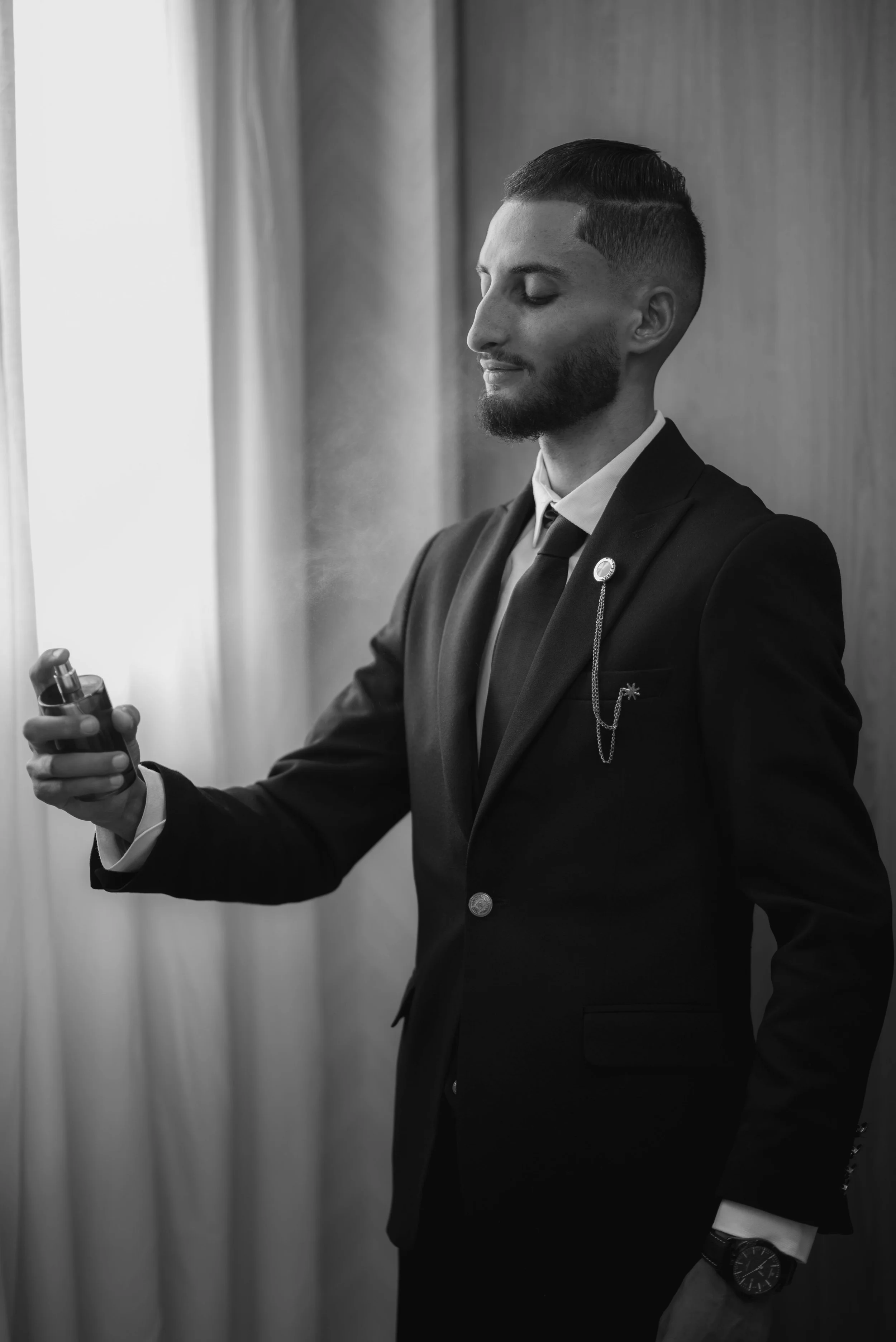
Not all accessories can be seen. Some are felt, remembered, even missed long after the moment has passed. Fragrance is the invisible thread that ties presence to memory—an extension of personality that lingers just long enough to be recalled, never announced. It's the detail people can't quite name but somehow associate with you, the scent that makes them think of you when they catch it weeks later on a stranger passing by.
Choosing a scent is less about preference and more about identity, about finding the olfactory signature that feels like an extension of who you already are. The crisp woods of Creed's Aventus, the spice of Terre d'Hermès, the balanced warmth of Tom Ford's Grey Vetiver—each communicates something different about the man who wears it. What matters isn't power or projection but subtlety, the ability to leave an impression without demanding attention. A fragrance should be discovered, not announced from across the room.
A well-chosen cologne evolves throughout the day, complementing fabric, temperature, and mood in ways that shift from morning to evening. Apply it lightly—wrists, neck, perhaps a trace on the inner jacket lining where body heat can lift it naturally. Like a well-tailored suit, it should feel like part of you rather than something you put on, an invisible layer that completes the presentation without overwhelming it. The best scents are the ones people lean in to notice, not the ones that arrive before you do.
The Pocket Square and Its Kin
If the suit is architecture, then its suit accessories are the details that give it soul—the molding, the hardware, the thoughtful touches that separate good construction from memorable design. The pocket square, tie bar, cufflinks, and lapel pin carry weight far beyond their size, small gestures that create immense impact when handled with care.
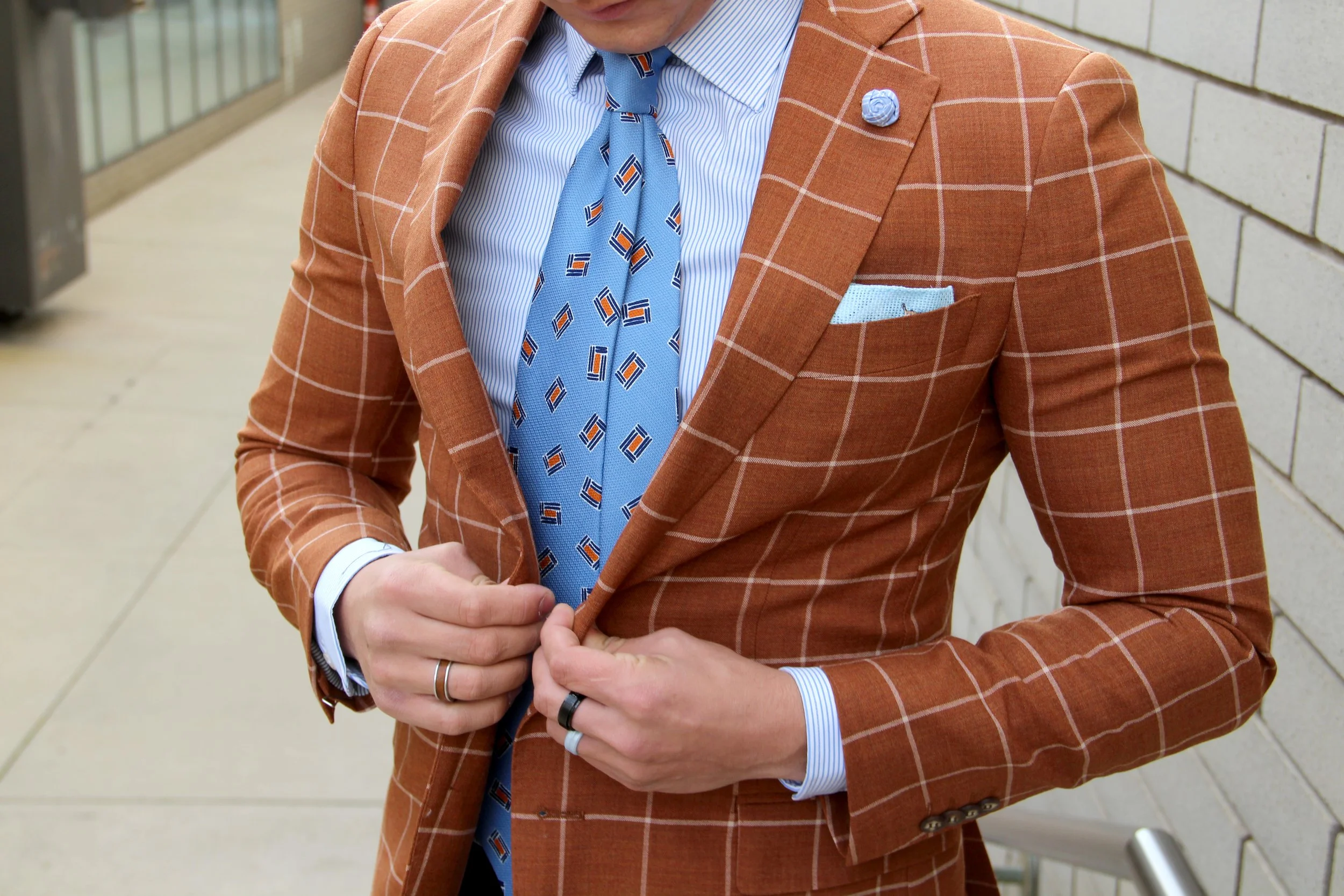
A pocket square, properly folded and placed, transforms the chest pocket from an empty space into conversation. It should never match the tie perfectly—that kind of coordination reads as costume rather than style. Contrast signals confidence, the understanding that harmony doesn't require uniformity. White linen remains timeless, a safe choice that elevates without risk. Silk introduces personality, pattern, and the opportunity to signal taste without shouting about it. The fold itself matters: a simple straight fold for formality, a puff for character, always with enough of the square visible to justify its presence.
Cufflinks, meanwhile, are jewelry for the pragmatic man, understated enough for discretion but personal enough to notice when chosen with care. They're an opportunity to carry something meaningful—initials, a family crest, a design that means something beyond aesthetics. Unlike a watch or ring, cufflinks can rotate with mood and occasion, making them one of the more versatile elements in a man's collection.
The lapel pin and tie bar, once dismissed as formal relics from another era, have returned as tasteful punctuation marks in the language of style. Each should be deliberate but never loud, present but not dominant. A simple metal bar keeps the tie in place while adding a horizontal line that balances the vertical thrust of the whole ensemble. A lapel pin—whether a simple flower or a understated badge—adds interest to the jacket's left side without competing with the pocket square. The best-dressed men know when to stop, when one more detail crosses from considered to cluttered.
These suit accessories aren't about excess—they're about expression. Together, they turn a suit from uniform to signature, from something anyone could wear to something distinctly yours.
Modern Companions: Digital and Everyday Carry
The 21st-century man carries more than his forebears ever did, but sophistication still lies in curation, not accumulation. Technology doesn't negate taste—it simply reframes the challenge, asking us to integrate modern necessities without sacrificing the principles that made traditional accessories work.
A sleek phone in a full-grain leather case, a tablet wrapped in understated wool felt, or earbuds housed in polished metal—all of these signal the same attention to detail as a polished shoe or tailored lapel. Even practical pieces like cardholders, key organizers, or minimalist wallets have evolved into objects of thoughtful design, proof that utility and aesthetics can coexist when someone cares enough to get both right.
The principle remains consistency. A cluttered pocket disrupts both silhouette and composure, the bulk breaking the clean lines you've worked to establish and the chaos undermining the impression of someone who has their affairs in order. Choose materials that age gracefully: leather that darkens and softens with use, steel that develops character through handling, brushed aluminum that wears its scratches as patina rather than damage. Modernity and tradition can coexist when design respects both, when the case protecting your phone looks like it could have accompanied a fountain pen a century ago.
Smart luxury thrives in this space—fewer items, each considered, each serving multiple purposes when possible. The modern men's carry is no longer about weight or abundance but intention, the careful selection of what actually matters versus what you think you might need someday.
Craftsmanship and Character: Why It All Matters
The world has made it easy to appear polished and harder to actually be so. Algorithms curate trends before they've earned the name; fast fashion mimics taste without understanding its foundation. What remains rare—and immediately recognizable to those who know—is genuine discernment, the ability to choose well because you understand what "well" actually means.
Accessories are small mirrors reflecting who we are when no one's watching, when the impression we make matters less than the standard we keep. They reveal patience in an impatient age, curiosity about how things are made, and respect for craft that refuses to compromise. A watch serviced rather than replaced, a pen refilled rather than discarded, a fragrance chosen season after season because it still feels right—these aren't acts of vanity but of self-respect, the understanding that quality deserves loyalty.
True style doesn't seek applause or recognition. It's the conviction that excellence belongs in the details, even if only you notice, especially if only you notice. Because ultimately, these choices aren't for the boardroom or the dinner party—they're for the man in the mirror, the one who knows whether he's being honest with himself about what matters.
The Final Impression: A Style Guide in Essence
Men's accessories complete the story the suit begins. They aren't there to impress but to express—to extend one's style beyond fabric and fit into the rituals of daily life, the small moments that accumulate into character.
A true style guide doesn't dictate what to wear; it teaches what to value. Choose pieces with integrity. Maintain them with care. Let them age alongside you, gathering the kind of patina that only comes from years of use and attention. Build a collection slowly, deliberately, avoiding the temptation to acquire everything at once in favor of adding only what genuinely fits your life and aesthetic.
The suit may introduce you—but the details, chosen with care and worn with confidence, will tell your story long after you've left the room. They're the punctuation in a larger sentence about who you are, the finishing touches that transform presentation into presence. And in a world that increasingly values speed over substance, that kind of attention to detail becomes its own form of rebellion.