
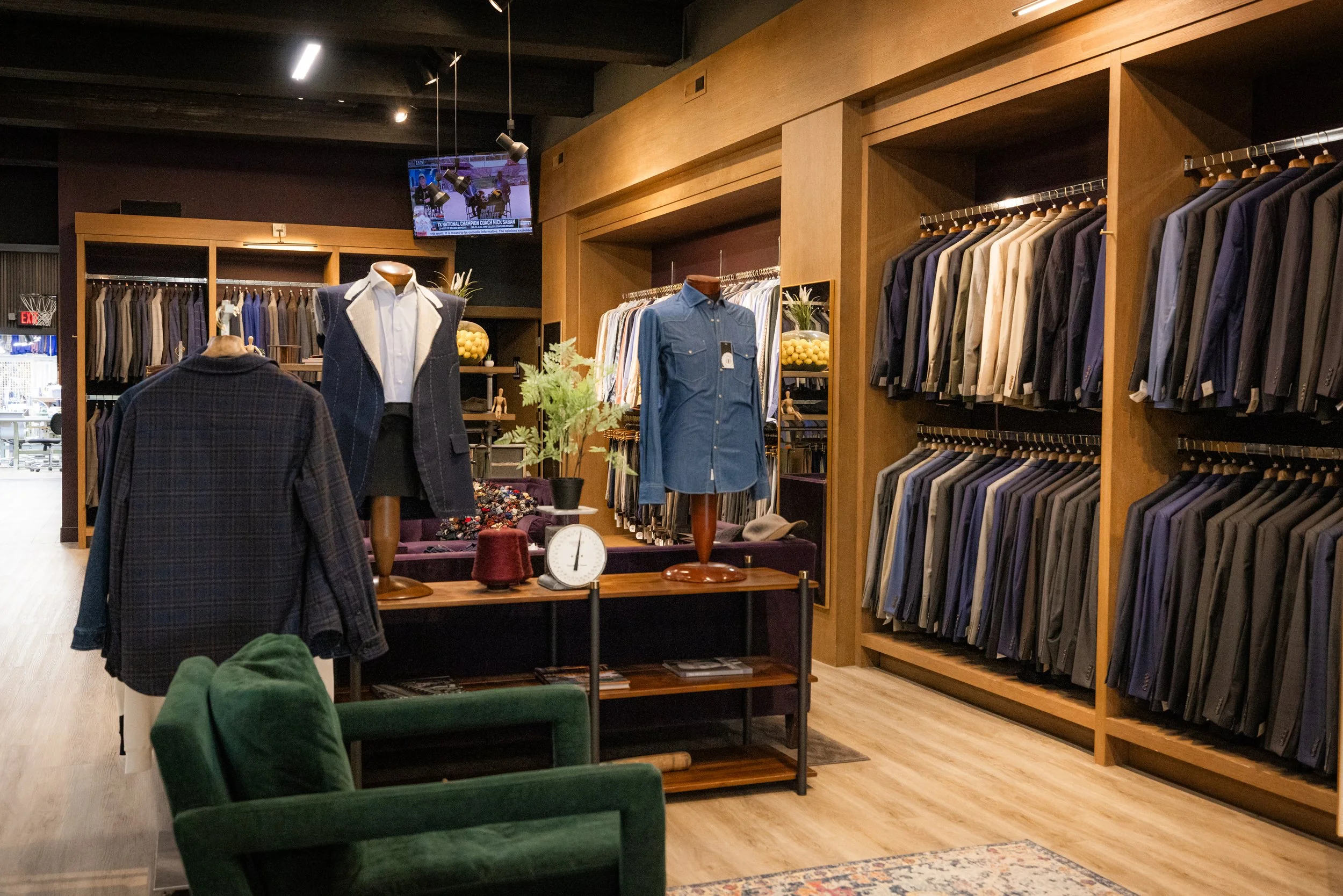
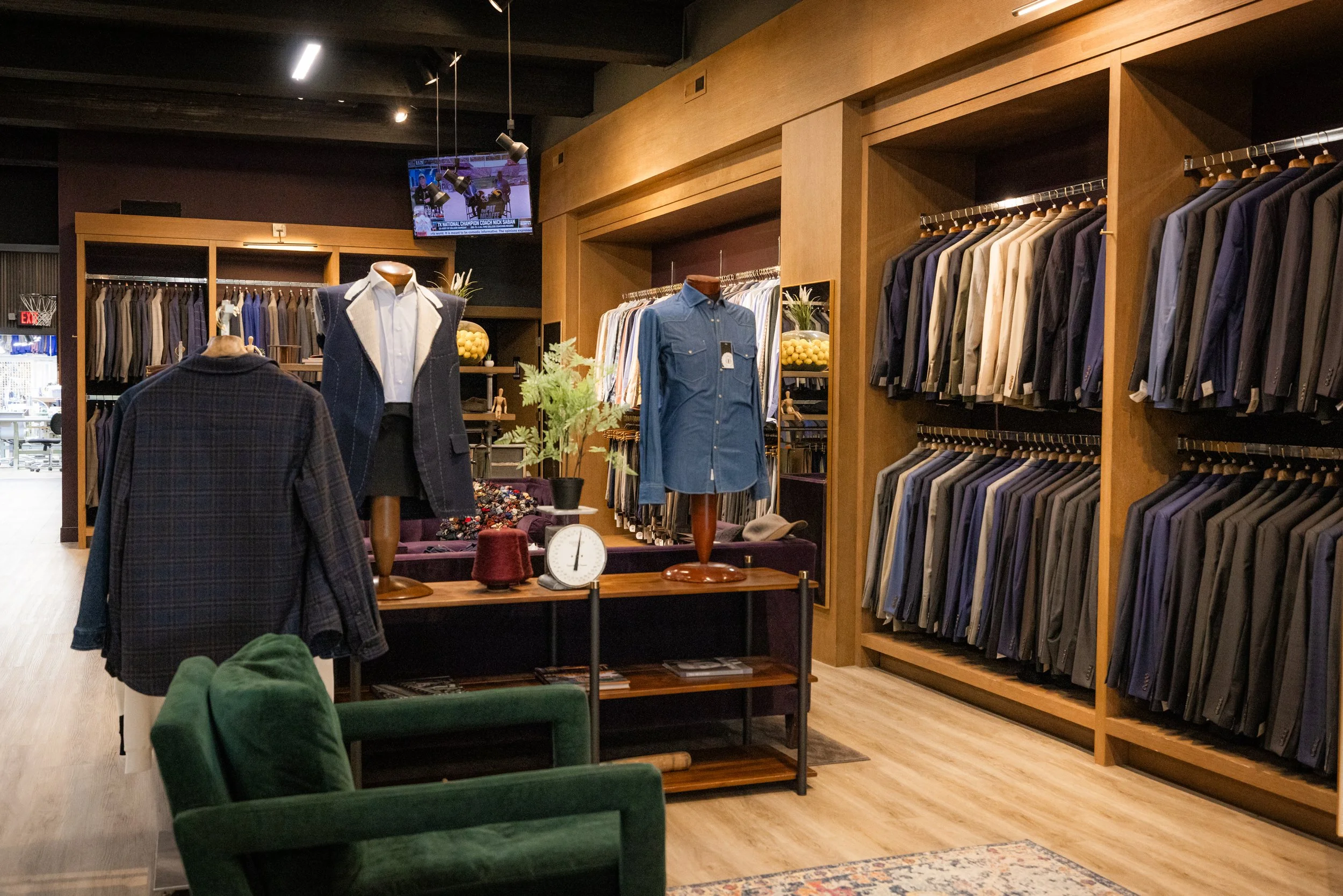
There was a time when suits followed the calendar. Heavier cloths for winter, lighter ones for summer, clear lines drawn between what belonged in January and what made sense in July. It worked—at least when life itself stayed more predictable.
It doesn’t really work that way anymore.
A single day now can start in cold morning air, move through heated interiors, stretch across a few different environments, and end somewhere that feels completely different again. In Northern Utah, that contrast is sharper than most places. You step outside into dry winter air, then spend the next eight hours in spaces that barely acknowledge the season at all. Clothing that only works in one of those conditions reveals its limits quickly.
That’s where the old seasonal model starts to show its limits. What’s replaced it isn’t anything dramatic. It’s a quieter shift toward men’s suits that adapt instead of specialize—garments built to move through changing temperatures and settings without asking for constant adjustment.
Understanding What “Year-Round” Actually Means
“Year-round” gets thrown around a lot, and it usually means less than it sounds like it should.
It doesn’t mean one suit that handles every extreme perfectly. That doesn’t exist. A fabric ideal in peak summer heat won’t behave the same way in January, and a heavy winter cloth will make you miserable indoors come August. The gap between those two things is real. What matters more is consistency across the conditions you actually spend time in.
Most time in tailored suits happens indoors—offices, restaurants, events, meetings. The environment is controlled even when the weather outside isn’t. A suit that handles those indoor conditions well, and stays comfortable during the short transitions between them, ends up far more useful than one built to excel in a single season you only experience in brief stretches. Once you look at it that way, the goal shifts from matching the calendar to simply choosing something that works across the full rhythm of your day.
Fabric Weight and the Middle Ground
Fabric weight is usually where this conversation starts, and it’s also where most advice gets a little too rigid. You’ll hear the standard breakdown—heavy cloth for winter, lightweight for summer—and technically, that’s not wrong. It’s just incomplete. The most useful range for most men sits somewhere in the middle.
Wools in the 260 to 280 gram range tend to handle the widest spread of conditions without drawing attention to themselves. They carry enough structure to keep a clean drape, but they don’t trap heat the way heavier cloths can. Light enough to stay comfortable indoors, but not so light they feel insubstantial the moment temperatures drop.
That’s where many modern tailored suits have landed—not optimized for any single season, but reliable across all of them. Not perfect. Just dependable. In practice, that tends to matter more.
How Construction Changes the Equation
Fabric alone doesn’t determine how a suit behaves year-round. Construction is doing just as much work, even when it’s invisible.
Heavily structured jackets—the kind that were standard in traditional men’s suits for most of the twentieth century—were built for stability and a formal silhouette. They hold their shape well. They also trap heat, resist airflow, and don’t move easily with the body. In a setting where you’re transitioning between outdoor cold and indoor warmth multiple times a day, that rigidity starts to work against you.
Lighter construction changes that. Half-canvas or minimally structured jackets let air circulate, follow the body instead of resisting it, and tend to feel more natural across a wider range of temperatures. The difference isn’t dramatic when you’re standing still. It becomes obvious over the course of a full day.
This isn’t about abandoning structure. A well-built custom suit still needs enough internal support to hold its shape and drape cleanly. It’s about using exactly as much structure as the garment requires—and not more. That balance is what gives contemporary tailored suits the flexibility to work across conditions the old model never really had to consider.
The Role of Fabric Technology
Fabric construction has also changed what men’s suits can actually do—and not just in ways that show up on a spec sheet. High-twist wools resist wrinkling and snap back to shape quickly after hours of wear. Mohair blends add durability and help the cloth hold its structure in warmer conditions without feeling stiff. Subtle stretch fibers let the garment move with you without compromising the line.
None of this is new in concept, but modern mills have gotten considerably better at working these properties into fabrics that still look and feel like traditional suiting. You won’t notice most of it at a glance; the cloth still looks like suiting. The difference reveals itself later—how the jacket hangs at the end of a long day, how it recovers after a few hours in a car, whether it still holds its shape when you finally get where you’re going. For anyone who relies on tailored suits regularly, those small advantages add up faster than you’d expect.
Climate, Context, and Northern Utah
Northern Utah doesn’t follow a simple seasonal pattern. Winters are dry and cold, summers run bright and warm, and the shifts between them can come quickly. But more than the seasons themselves, it’s the daily movement between conditions that shapes what a suit actually needs to do here.
A morning commute means cold air and an extra layer. A few hours later, you’re in a climate-controlled office where the weather outside might as well not exist. An evening event brings a different setting entirely. A suit that only performs well in one part of that cycle is going to feel like a liability in the others.
That’s where adaptability stops being a talking point and starts being practical. Choosing men’s suits that can move between those conditions without becoming a problem simplifies the whole wardrobe. Fewer rotating pieces, more consistent use, more value out of each garment.
Versatility Beyond Temperature
Seasonal adaptability isn’t only about temperature. It also changes how well a suit works across different levels of formality—which matters more than most people expect.
Traditional formal men’s suits carry a certain weight—literally and visually. Heavier cloth, sharper structure, darker colors. That combination signals formality clearly, but it also locks the garment into a specific register. Lighter, more relaxed options have historically read as casual men’s suits by comparison, with less range in either direction.
The modern approach softens that divide. A well-chosen fabric and balanced construction give a single suit more range. Worn with a tie and a crisp shirt, it reads as formal. Without one, it relaxes into something more social without feeling underdressed. The same garment can move from a client meeting to an evening out without requiring a change.
The line between casual men’s suits and formal ones isn’t gone, but it’s become more flexible. Styling does more of the work now than the garment itself used to.
Building a More Practical Wardrobe
Thinking in terms of year-round use changes how a wardrobe gets built. Instead of collecting suits tied to specific seasons, the focus shifts toward pieces that cover the most ground and earn their place by getting worn consistently, rather than waiting for the right month.
A small number of well-chosen custom suits, built with adaptability in mind, can handle a wide range of conditions. Fabric weight, construction, and color all contribute. Neutral tones transition more easily between settings. Balanced fabrics reduce the need to swap things out constantly, and your wardrobe ends up smaller and more functional at the same time.
None of this means heavier flannels or lighter linens disappear. They still have their place. But they become additions to a reliable core rather than required pieces of a rotating system. The seasonal items fill in around a foundation that doesn’t need managing.
Why the Old Model Still Lingers
Despite all of that, the idea of strictly seasonal suits hasn’t disappeared. Part of that is tradition—the old system made genuine sense in a different context, when environments were less controlled and daily routines were more predictable. It wasn’t arbitrary.
There’s also a certain appeal to its clarity. Dividing clothing by season feels organized, as it’s easy to follow. The problem is that clarity doesn’t always translate into practicality, and in modern life, it often doesn’t.
Climate control, flexible schedules, and regular travel have blurred the boundaries the old model relied on. Sticking to a rigid seasonal system in that environment can create more friction than it removes. Suits end up sitting in the closet not because they’re unnecessary, but because they feel too specialized for how most days actually go.
Moving away from that model isn’t about rejecting tradition. It’s about updating it to match the conditions it’s actually working in now.
The Value of Consistency
When you get down to it, the appeal of year-round men’s suits is mostly about consistency and what it feels like to not have to think about your suit while you’re wearing it.
A suit that behaves predictably across different conditions removes a layer of low-grade uncertainty from the day. You’re not wondering whether the fabric is too heavy for this room, or whether the jacket will feel stifling by afternoon, or whether it’ll still hold its shape by the time you actually need it to. It just works, and you can stop thinking about it.
That changes the relationship between the wearer and the garment. The suit becomes something that supports the day rather than something you’re quietly managing through it. For most people, that’s the real advantage—not perfection in any one season, but confidence across all of them.
The Modern Adaptability
The idea that suits must follow the seasons is becoming less relevant by the year—not because tradition is wrong, but because modern life doesn’t operate within those boundaries anymore. Clothing has adapted to that reality whether the old seasonal model acknowledged it or not.
Men’s suits built for year-round use offer a different kind of value. Less complexity, more consistent use, and a better match for how most people actually move through their days. The calendar stops being the organizing principle. Dependability takes its place.
In Northern Utah, where conditions shift quickly and a single day can run through several different environments, that adaptability isn’t a luxury. It’s just practical. A suit that handles those shifts without becoming a problem earns its place in your wardrobe far more easily than one built for a season you only fully experience for a few weeks at a time.
That’s the quiet shift taking place—not away from tradition, but toward something more practical. A season without seasons, where the suit no longer belongs to the weather, but to the person wearing it.