
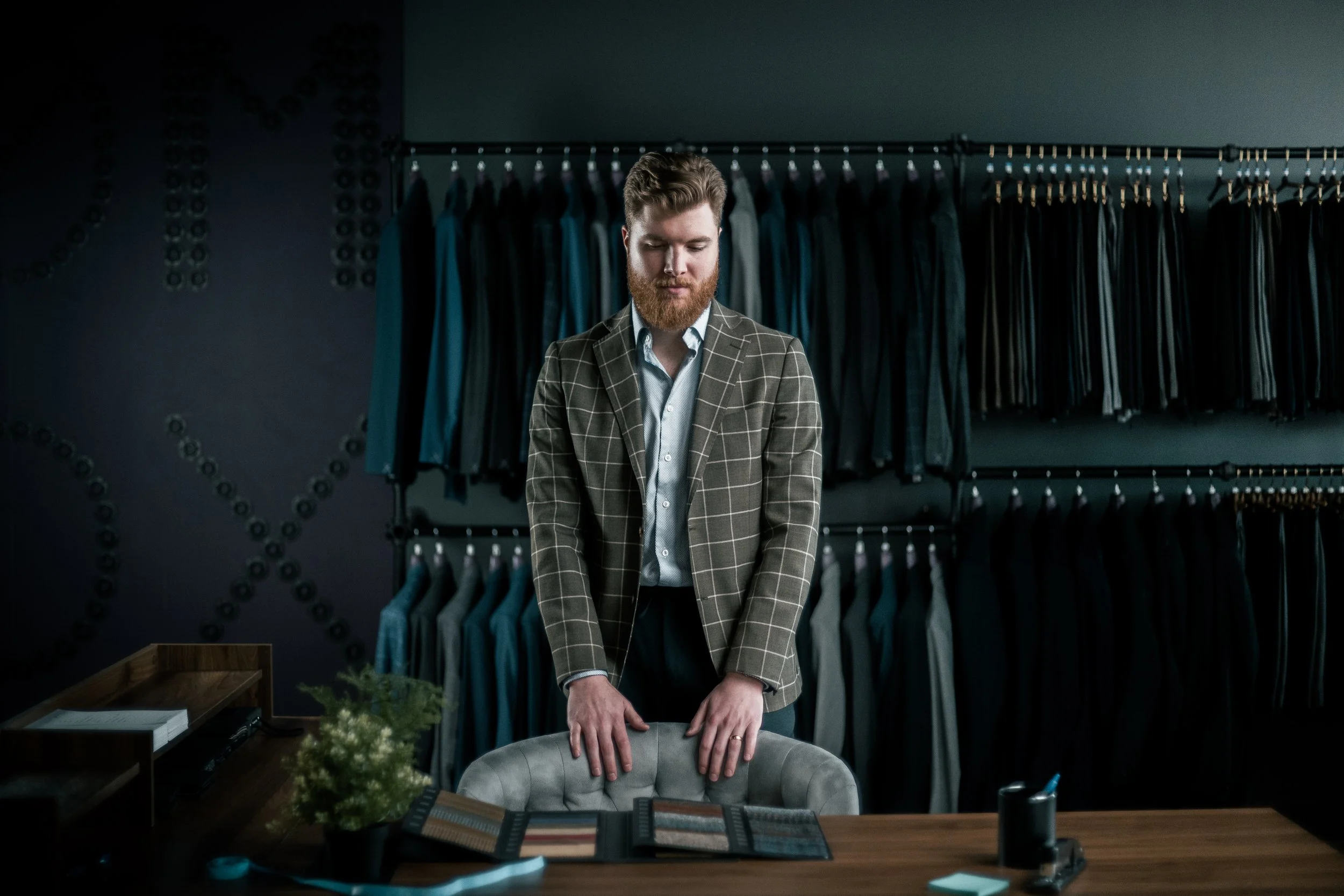
The real challenge with men’s suits in Northern Utah isn't knowing that flannel belongs in winter—it's figuring out whether that 11-ounce navy you're considering will actually get worn enough to justify its place in your closet. In a climate where June mornings start at 55°F before hitting 95°F by afternoon, and where winter isn't a suggestion but a five-month commitment, the conventional wisdom about "three-season suits" starts to break down.
What works here is different. The region's high-desert climate and genuine seasonal swings create specific wardrobe demands that guidebooks written for coastal audiences don't quite address. You need suits that perform in actual heat and actual cold, with less need for the middle-ground compromise pieces that dominate most recommendations.
Understanding Fabric Weight and Seasonal Performance
Fabric weight gets measured in ounces per yard, which sounds technical until you realize it's just describing how much material you're wearing. The difference between 9 and 14 ounces isn't subtle—it's the difference between walking outside comfortably in August versus feeling like you're wrapped in a blanket.
For Northern Utah summers you want 7 to 9 ounces. The best tailored suits in this range use tropical wools, fresco weaves, or hopsack. In the dry heat here, where humidity rarely becomes a factor, these lighter weaves breathe remarkably well. You're not fighting moisture, just managing heat, which actually makes lightweight wool perform better than you'd expect.
The middle ground sits at 10 to 12 ounces. Here's where the regional reality matters: these weights shine during April-May and September-October when mornings hit the 40s and afternoons reach the comfortable 60s and 70s. But those windows are brief. Northern Utah tends to move decisively from winter to summer rather than lingering in transition. Your 11-ounce navy worsted is perfect for these periods—you'll just wear it less often than someone in San Francisco would.
Winter means 13 to 16 ounces or heavier. From November through March (sometimes into April), this isn't optional. Flannel, tweed, and heavyweight worsteds dominate because they need to. The weight provides insulation, yes, but it also creates the visual presence and texture that signals you've dressed intentionally for the season. When you're investing in custom suits, having at least one proper winter option makes sense for the simple reason that you'll wear it for nearly half the year.
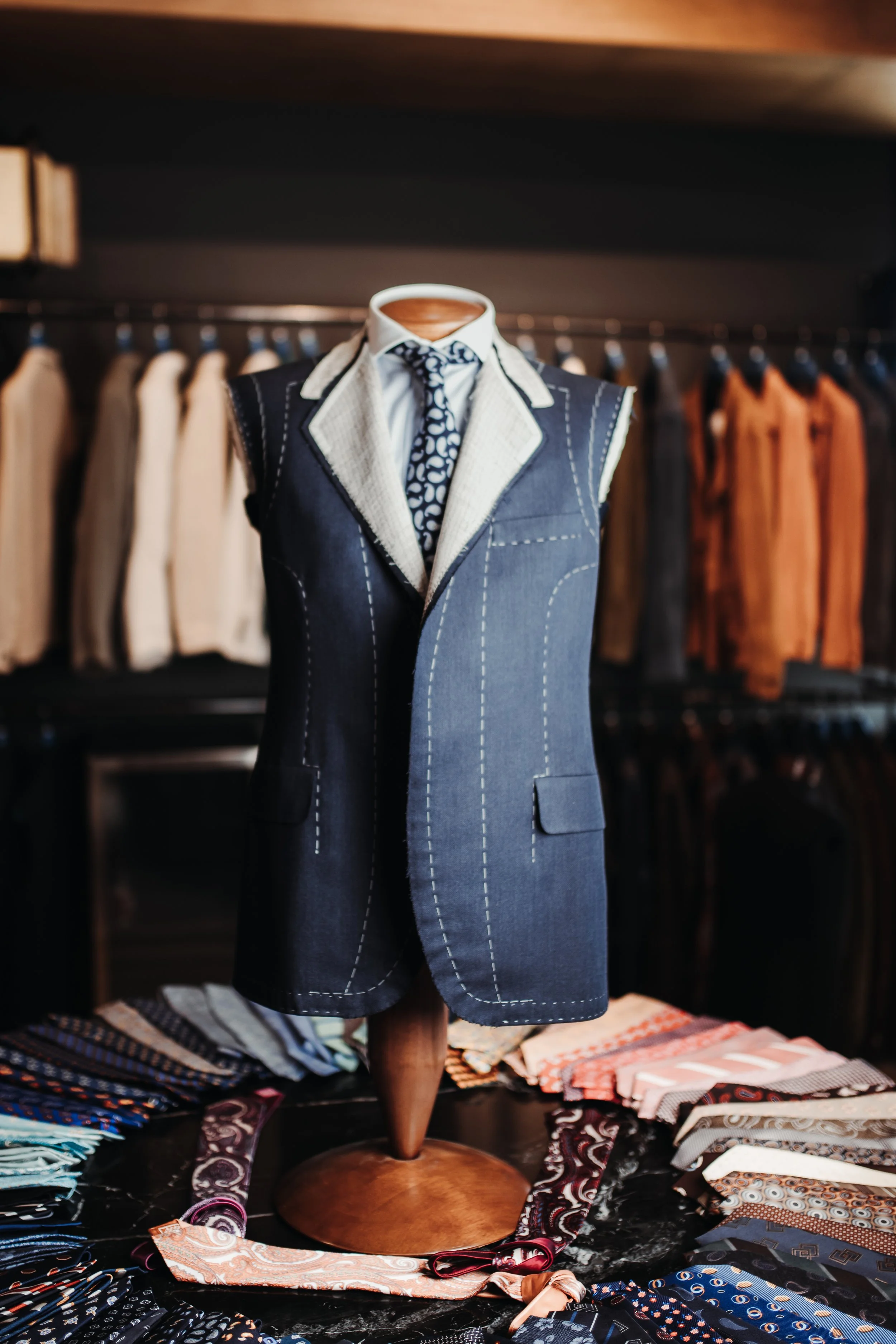
The Core Four: Essential Suits for Year-Round Coverage
Building a rotation here means thinking differently than you would in Seattle or Boston. The question isn't "what covers the most days" but "what handles the actual extremes."
Start with a worsted in 10 to 11 ounces. Not because it's the most-worn piece—it probably won't be—but because it handles the shoulder seasons perfectly. It's your default for spring weddings, fall business dinners, and those perfect 65-degree evenings. People call these the best tailored suits for versatility, but in Northern Utah, understand that "versatile" means "perfect for two months, adequate for maybe two more."
For summer, you need something in 8 to 9 ounces, and this is where the rotation shifts. A light gray or tan tropical wool isn't a luxury purchase—it's acknowledging that you'll face 90-degree heat from June through August, and often into September. Fresco weave works exceptionally well in dry heat. This suit will get more wear than the mid-weights simply because summer here is longer and more intense than the shoulder seasons. When you're wearing it three or four months straight, the investment in quality fabric makes immediate sense.
Winter demands a flannel or heavyweight worsted. This suit needs to perform from November through March, sometimes longer. That's five months where anything lighter feels inadequate when you step outside. The best tailored suits for winter are about actually staying comfortable during single-digit mornings and understanding that the season is substantial enough to justify proper fabric weight.
Fabric Selection: Beyond Weight Considerations
The ounce count tells you how much fabric you're wearing, but the weave determines how it actually behaves. This distinction matters more in a high-desert climate where you need fabrics that work with dry air rather than fighting humidity.
Super numbers—Super 100s, Super 150s, and so on—measure how fine the wool fibers are, not how good the fabric is. A Super 180s feels remarkably soft, but that delicacy means it won't hold up to regular wear the way a Super 120s or 130s will. For custom suits you're actually planning to wear rather than preserve, Super 120s through Super 150s hit the practical sweet spot. Fine enough to drape well, sturdy enough to handle rotation.
Weave structure changes everything about how a suit performs. Plain weaves create smooth, durable fabrics that work across seasons—your mid-weight navy should probably be a plain weave. Twill weaves add that subtle diagonal texture and a bit more visual interest without adding much warmth. For summer, fresco and hopsack weaves are worth understanding: they're both open-structure weaves that create tiny air channels in the fabric. In Northern Utah's dry heat, these weaves breathe remarkably well.
Flannel deserves its own mention. The napped surface isn't decorative—it traps air against your body, which is exactly what you want when it's 15° outside. The texture also reads immediately as winter-appropriate, which matters when you're building luxury suits that need to work in professional contexts. A smooth worsted wool in January looks fine; a proper flannel looks intentional.
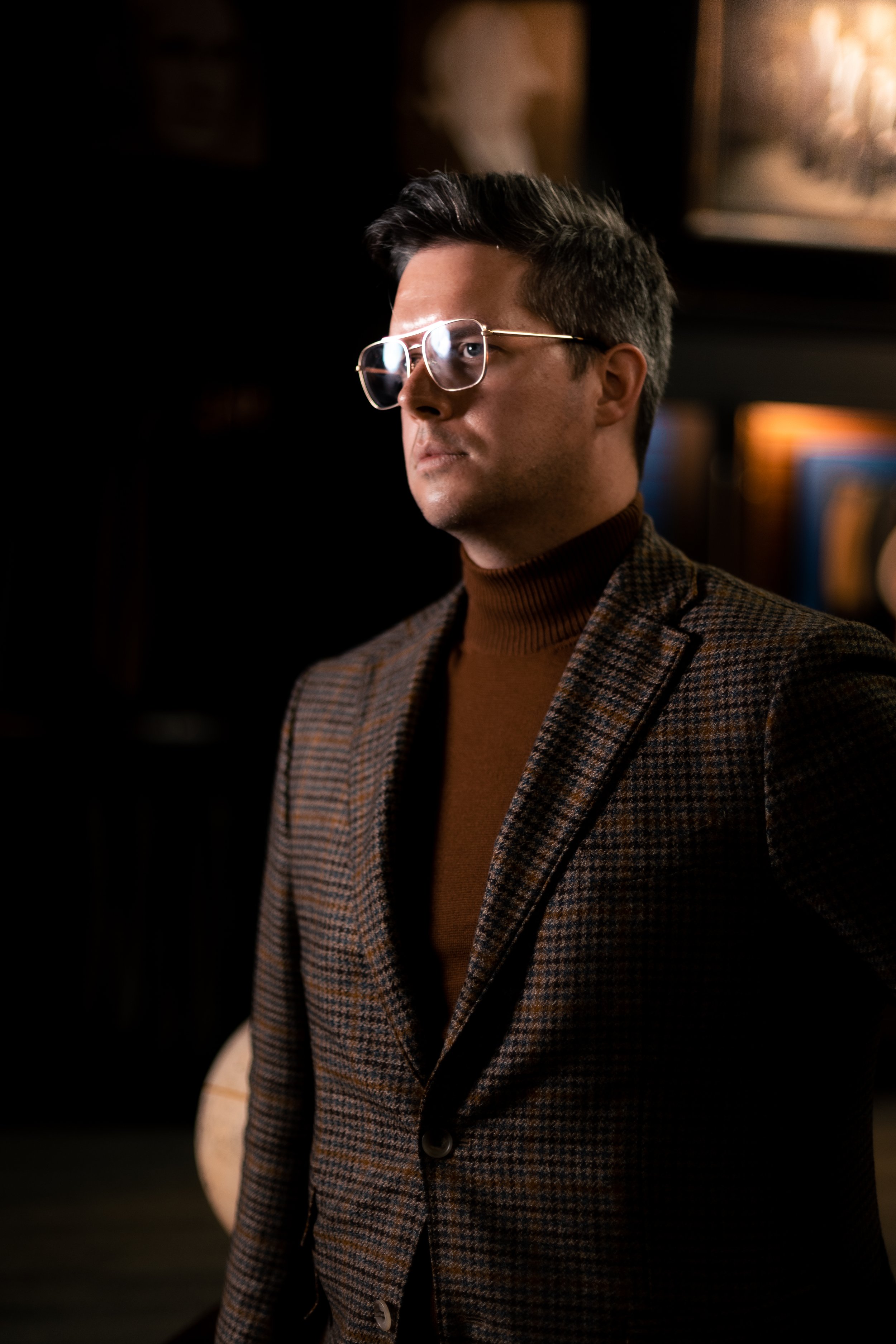
Strategic Timing: When to Rotate Your Wardrobe
The rotation calendar here looks different than what you'd follow in milder climates. Northern Utah gives you distinct seasons, but they don't arrive in neat quarters. Mid-weight suits—those 10 to 12-ounce pieces—work beautifully from mid-April through May, then again in September and early October. These are the windows when morning temperatures stay above freezing, afternoons hover in the 60s and 70s, and you're genuinely comfortable in a suit outdoors. But recognize these periods for what they are: brief. The region moves decisively from cold to hot rather than lingering in transition.
Summer suits earn their place from late May through early September. Once daytime highs consistently hit 80° and climb from there, lightweight fabrics stop being preference and become necessity. The dry heat actually works in your favor—9-ounce tropical wool in 90° weather is manageable here in ways it wouldn't be in Houston. You're dealing with temperature, not humidity, which means breathable weaves perform exactly as designed.
Winter runs November through March, and frequently pushes into early April. When you're seeing mornings in the teens and single digits regularly, heavyweight fabrics aren't about making a statement—they're about comfort. Even if you're mostly indoors, the walk from your car matters, and showing up in appropriate seasonal weight signals you've thought about details. In a professional context, that awareness registers.
The brief shoulder seasons mean you'll spend less time in mid-weight suits than conventional advice suggests. That's fine. The goal isn't maximum wear for every piece—it's having the right suit for actual conditions rather than forcing compromise solutions when the weather doesn't cooperate.
Practical Considerations for Building Your Rotation
The standard advice says start with mid-weight suits and add seasonal pieces later. That works in temperate climates. Here, you're better off thinking in terms of summer and winter coverage first, then filling in the shoulder seasons.
If you're starting from scratch, your first purchase depends on when you're buying. Shopping in March? Get that mid-weight—you'll wear it immediately and appreciate having it for fall. Buying in July? Start with summer weight. There's no point owning a perfect spring suit if you won't wear it for nine months, and by then your preferences or needs might have shifted.
The reality is that summer and winter dominate the calendar here. You'll get more use from a proper 9-ounce summer suit and a proper 14-ounce winter flannel than from two mid-weight compromise pieces. Those transitional suits matter—they're perfect when conditions are right—but they're specialists for brief windows rather than workhorses.
Color and pattern carry seasonal weight beyond fabric specs. Lighter colors read as warm-weather choices even if the fabric weight is identical to something darker. Your mid-gray suit in April feels different from the same weight in October partly because of contextual expectations. This isn't arbitrary—it's useful information when you're deciding what to add next to your rotation.
Storage in Northern Utah's dry climate is straightforward. You're not fighting mold or moths the way humid regions do, which means rotation is more about organization than preservation emergencies. Cedar closet blocks, breathable garment bags, and giving suits space to hang properly will handle most concerns. The low humidity that makes summer more bearable also makes off-season storage easier.
Making Strategic Additions Over Time
The key is addressing real gaps rather than accumulating variations. If you have two mid-weight tailored suits but nothing for summer, and you're uncomfortable three months of the year, the next purchase is obvious. If you're layering multiple pieces under your suits all winter and still cold, that heavyweight flannel becomes essential rather than aspirational.
Pay attention to what you wish you had. After wearing your current rotation through a full year, you'll have clear data about what's missing. Maybe you find yourself reaching for the same summer suit too often because it's the only one that works in heat. Northern Utah's climate means you'll eventually want equal depth in summer and winter categories, with less investment in transitional weights.
That's a different distribution than conventional advice suggests, but it matches the actual conditions you're dressing for. Someone in San Francisco or Seattle can build around mid-weight foundations and add seasonal specialists. Here, the seasons are distinct enough that you need proper solutions for both extremes.
Think about five years out. You're trying to reach a point where you have appropriate options for any realistic situation. That probably means two or three summer suits, two winter suits, and one or two mid-weight pieces. Maybe more if your professional life demands it, maybe fewer if you're selective about when you wear suits. But the principle holds: build for the climate you have, not the climate you wish you had.
The Final Wardrobe
Building a suit wardrobe for Northern Utah means working with the climate rather than against it. The conventional wisdom about three-season versatility breaks down here because the seasons themselves are too distinct—summer is genuinely hot, winter is genuinely cold, and the transitions are brief enough that building around them leaves you uncomfortable most of the year.
Fabric selection matters beyond the ounce count. Weave structure, fiber fineness, and surface texture all influence how a suit performs in dry, high-desert conditions. Understanding these details means making better decisions when you're investing in custom suits that need to work for years rather than seasons.
The best approach is gradual and responsive. Build based on what you actually need, when you need it, and pay attention to how your existing pieces perform through a full year. That experience tells you more about what's worth adding than any theoretical framework can. The goal is having appropriate options when you need them, and the confidence that comes from understanding why those options work in this specific climate.