

Pick up a suit jacket and most people immediately check the cut, the fit, maybe the lining. The fabric—where it was woven, how it was finished, the traditions that shaped it—tends to get overlooked. That's a shame, because with Italian luxury suits, the cloth is the whole story. It's what separates a garment that ages gracefully and performs through years of wear from one that looks good on the rack and disappoints by spring.
For professionals along the Wasatch Front, this matters more than it might in other parts of the country. Northern Utah's climate is genuinely demanding—hot, dry summers followed by real winters, with brief shoulder seasons that barely give a wardrobe time to adjust. Understanding where Italian suiting fabric comes from, and what that means for performance, turns suit shopping from a guessing game into a confident, informed investment.
The Regions Behind Italian Luxury Suits
Italy's dominance in suiting fabric isn't an accident of marketing—it's the result of centuries of concentrated expertise in very specific places. Biella, tucked into the Piedmont Alps, has been refining wool production since medieval times. The region's naturally soft mountain water turned out to be ideal for finishing fabric, and the mills that grew up there have been perfecting the art ever since. Today, Biella is home to some of the finest worsted wool producers in the world.
Prato, near Florence, took a different path, becoming the center for carded wool and developing innovative techniques for working with blended fibers. Como mastered silk. The Veneto region built expertise in luxury blends. None of this is coincidence—each area evolved its specialty based on local water quality, available raw materials, and knowledge passed down through generations of family-owned mills.
What makes Italian mills genuinely different isn't any single ingredient but rather the integration of the entire process. Mills like Loro Piana maintain direct relationships with cashmere herders in Inner Mongolia and merino sheep farmers in Australia, overseeing quality from the animal to the finished bolt of cloth. That kind of vertical control produces a consistency that fabric merchants assembling cloth from multiple sources simply cannot match.
Zegna Suits and Canali Suits: Two Philosophies, One Standard of Excellence
When conversations turn to Italian suiting at the highest level, two names come up repeatedly: Ermenegildo Zegna and Canali. Both produce exceptional garments, but they arrive at excellence through distinctly different philosophies—and understanding those differences helps when deciding which direction suits a particular wardrobe need.
Zegna suits carry a unique advantage: the company has been both a fabric mill and a garment manufacturer since its founding in 1910 in Trivero. The Zegna mill began by producing wool fabrics and only later expanded into finished clothing, which means there's a continuous feedback loop between the people weaving the cloth and the people cutting and sewing the suits. The result shows up in their Trofeo and High Performance fabric lines—textiles engineered for travel resilience and temperature adaptability that wouldn't exist without garment-making insights informing textile development.
Canali suits take a different approach. Founded in 1934, Canali built its reputation on tailoring mastery, sourcing cloth from premier Italian mills—including Loro Piana and other Biella producers—and focusing its energy on construction, fit, and finish. Neither approach is superior; they simply reflect different priorities. If fabric innovation engineered for specific performance characteristics is the goal, Zegna's vertical integration is compelling. If construction refinement and tailoring precision are what matter most, Canali's focused expertise is hard to argue with.
For Northern Utah professionals, both houses offer real solutions. Zegna's travel-oriented fabrics handle the kind of rapid temperature shifts that happen when moving from a heated building into a January parking lot. Canali's construction precision produces garments that maintain their shape through long professional days—no small thing when a suit might go from a morning meeting to an evening event.

Designer Suits for Men: Separating Genuine Craft from Brand Premium
The market for designer suits for men covers a wide range—from extraordinary Italian craftsmanship to fashion-forward labels that are primarily selling an identity. Knowing the difference requires looking past the label and into the garment itself.
Start with fiber quality and the Super number system. Super 110s, Super 150s, Super 180s—these designations measure wool fiber fineness in microns. Higher numbers indicate finer, softer wool, but also more delicate fabric. A Super 180s cloth feels remarkably luxurious but may show wear faster under the demands of daily professional use. A robust Super 120s can deliver excellent hand feel with considerably more durability. Neither is universally better; the right choice depends on how often the suit will be worn and for what occasions.
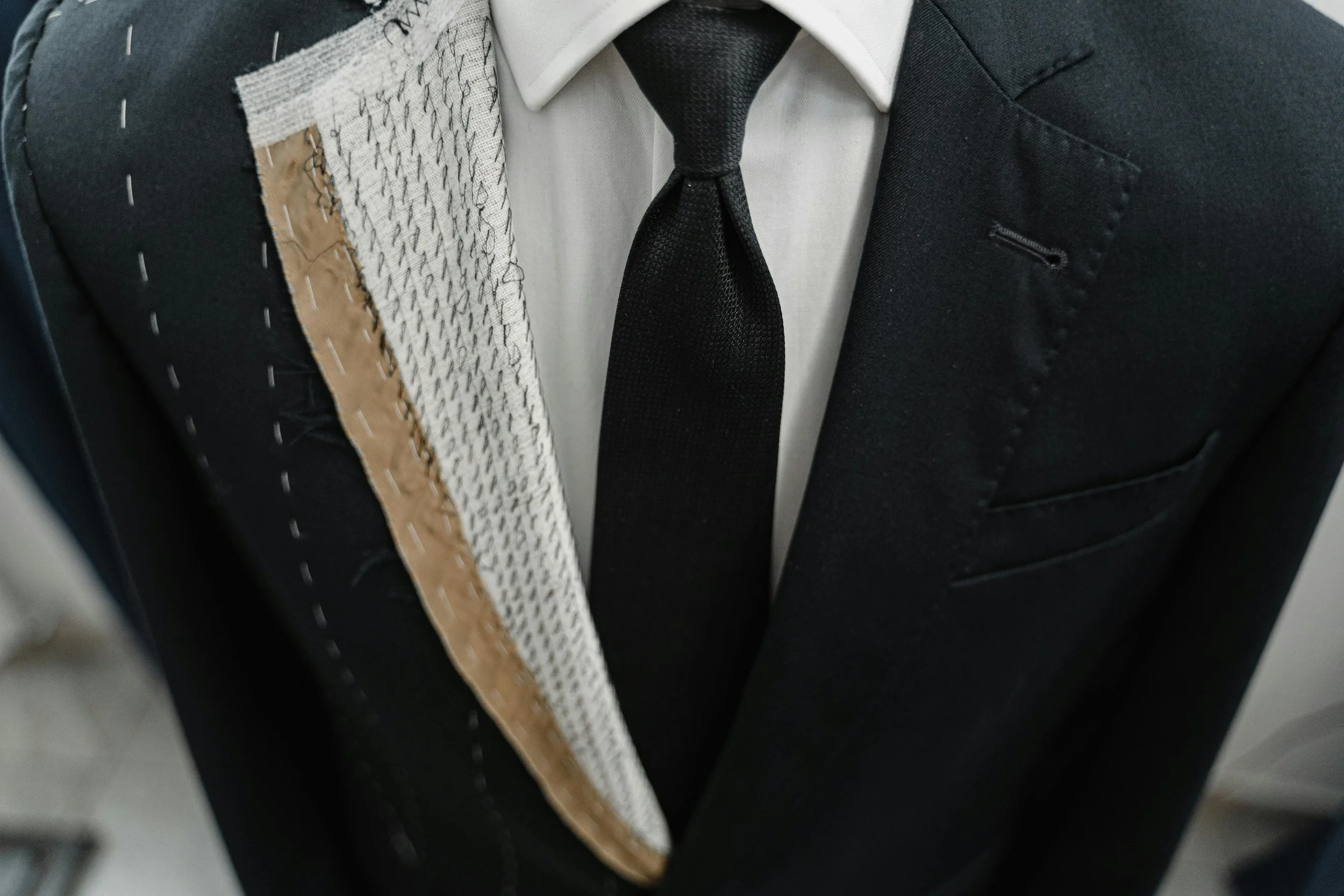
Construction quality matters just as much as fabric. Full canvas construction—where a horsehair canvas is hand-stitched between the outer fabric and the lining—allows the jacket to gradually mold to the wearer's body, improving fit over time. Half-canvas preserves this benefit in the chest while reducing cost. Fused construction bonds an adhesive interfacing to the fabric, producing a stiffer feel and a shorter useful life. Crucially, price alone doesn't guarantee construction quality. Some heavily marketed designer suits for men command premium prices while using fused construction, while lesser-known Italian makers build full-canvas garments at more accessible price points.
Luxury Fashion for Men: Reading the Details That Actually Matter
The broader world of luxury fashion for men rewards those who learn to read the details. Fabric weight, measured in grams per square meter, tells you a lot about appropriate seasonality—lighter weights around 200–250 gsm work well for summer, while 280–320 gsm fabrics carry through colder months. Weave structure matters too: plain weaves are crisp and formal, twills are smooth and wrinkle-resistant, hopsacks offer an open texture that breathes well in warm weather.
Finishing details reveal construction philosophy. Functioning buttonholes on jacket sleeves, pick-stitching along lapels, a working surgeon's cuff—these are markers of hand craftsmanship that distinguish garments made with care from those produced efficiently. Horn buttons, properly padded shoulders, and a cleanly finished interior all signal that someone paid attention to the things most buyers never think to check.
In the world of luxury fashion for men, informed buyers consistently find better value. Understanding what to look for removes the dependence on brand recognition or price as proxies for quality—and opens up a wider field of excellent options.

Why Italian Luxury Suits Work Particularly Well in Northern Utah
Italian fabric innovation didn't emerge in a vacuum—it developed in response to Mediterranean climate demands that turn out to translate remarkably well to life along the Wasatch Front. Both regions share hot, dry summers, genuine cold winters, and the challenge of moving between very different temperature environments in the course of a single day.
High-twist worsted fabrics, for instance, resist wrinkling beautifully—ideal for the kind of long Utah professional days that run from an early morning meeting through a client dinner. Fresco weaves, with their open structure and twisted yarns, deliver real breathability during July without sacrificing the clean, structured look that professional settings demand. And the heavier Biella flannels made famous by houses like Loro Piana provide genuine warmth through Utah winters without the bulk that lesser-quality fabrics require to achieve the same insulation.
The investment case for Italian luxury suits in this region comes down to per-wear cost. A well-constructed suit in quality Italian cloth maintains its structure, appearance, and comfort through years of regular professional wear. Cheaper alternatives often show their limitations within a season or two—pilling, losing shape, or developing the tell-tale shine of worn fabric. When the total cost is spread across the actual life of the garment, premium cloth typically wins.
How to Evaluate Italian Luxury Suits in Person
No amount of reading replaces the experience of handling quality cloth, but knowing what to look for makes a hands-on evaluation far more productive. When examining a suit jacket, hold the fabric up and let it fall freely—premium wool drapes in clean, fluid lines rather than bunching or clinging awkwardly. Run a hand across the surface; high-quality Italian cloth feels smooth without the slightly synthetic slickness that sometimes accompanies lesser materials. Squeeze a section firmly for a moment and release it. Resilient fabric recovers almost immediately; cheaper cloth holds creases.
Ask specific questions and pay attention to how they're answered. Any retailer worth the relationship should be able to speak fluently about mill origin, super number, weave structure, and canvas construction. Vague answers or deflection toward brand names are signals worth noting. Questions about care requirements and expected longevity also reveal whether a retailer understands the practical realities of the garments they're selling.
Compare garments from different makers at similar price points. The differences in hand feel, drape, and construction quality often become immediately apparent once there's a reference point. Zegna suits and Canali suits, for example, present distinctly different experiences in hand—not better or worse, but different in ways that speak to their different production philosophies.
Building a Wardrobe That Actually Works
The goal behind understanding Italian suiting tradition isn't to become a textile scholar—it's to make better decisions about a meaningful investment. A suit is worn for years, seen at important professional moments, and ideally improves with each wearing as it molds to its owner. That's what well-made Italian luxury suits do when the fabric and construction are right.
For Northern Utah professionals, the path forward is practical: prioritize fabric origin and construction quality over brand recognition or current trend. Learn a few key questions to ask. Spend time with the cloth before committing. Seek out retailers who demonstrate genuine knowledge rather than simply presenting options.
Whether the choice ultimately lands on Zegna suits, Canali suits, or another maker within the Italian luxury tradition, what matters is that the decision is informed. The fabric will perform better, the garment will last longer, and the investment will justify itself season after season. That's not aspirational—it's just what good cloth does.