
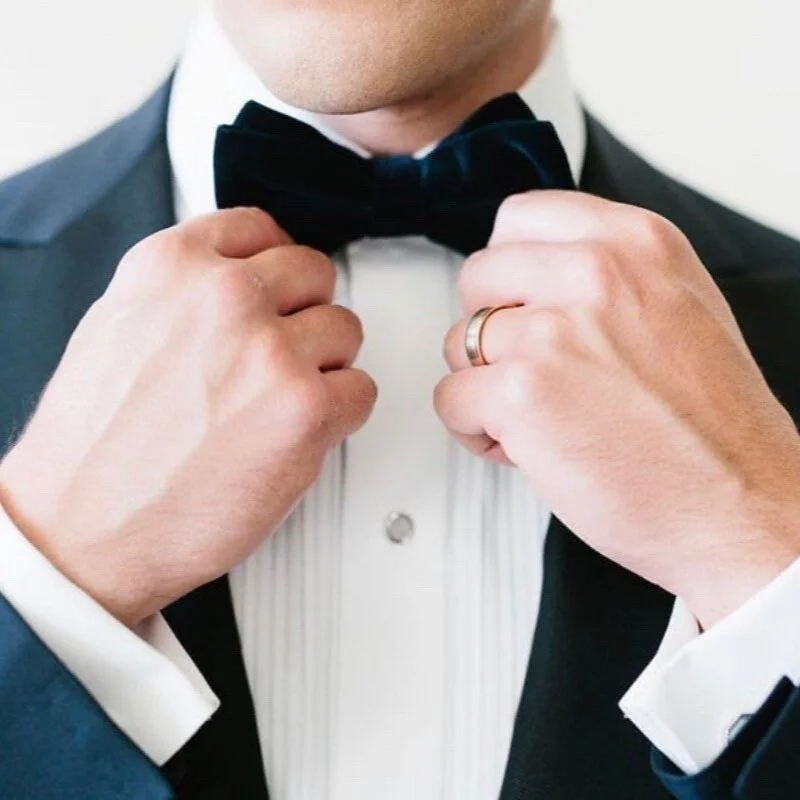
Wedding planning involves a staggering number of decisions, but few carry the lasting visual weight of what the groom wears. The photographs from this day will hang on walls, fill albums, and resurface at anniversaries for decades. And yet, many grooms treat their attire as a secondary concern—defaulting to rental options or rushed off-the-rack purchases that produce results nobody remembers fondly.
Made-to-measure suits for weddings offer a genuinely different path. The result is a garment that fits the groom’s specific proportions, suits the specific occasion, and earns its investment by serving well beyond a single day. For Northern Utah grooms navigating everything from LDS temple ceremonies to mountain resort receptions, understanding this process makes the difference between “good enough” and genuinely excellent.
Why Made-to-Measure Suits for Weddings Outperform Rentals
The rental logic sounds reasonable at first: wear it once, return it, spend less. In practice, the math rarely works out. Rental suits have been worn and adjusted by dozens of previous customers, and the fit reflects that history—shoulders that sit slightly off, jacket lengths that compromise between too long and too short, trouser breaks that weren’t planned for the specific shoes being worn. The fabric is intentionally modest because rental companies price in eventual replacement. The cumulative effect shows up clearly in photographs.
Made-to-measure suits for weddings address every one of these limitations. Measurements taken for a specific person produce fit that actually flatters their proportions. Fabric selection allows matching the formality level, venue climate, and the groom’s personal preferences. And the construction quality justifies itself when the garment moves with the groom through the next five or ten years of formal occasions, professional events, and family celebrations.
The cost comparison shifts considerably once wedding attire is framed as the first wear rather than the only wear. A quality suit purchased for the wedding and then worn to formal events for years afterward costs substantially less per wearing than a rental used once and returned. That’s a practical argument, not just an aspirational one.
Wedding Suits Custom Tailored: Timeline and What to Expect
One of the most common mistakes grooms make is underestimating how much time the custom tailoring process requires. Wedding suits custom tailored to a specific person typically need eight to twelve weeks from initial consultation to final fitting—and that’s before accounting for any final adjustments. Grooms planning spring or summer weddings should start the process by late winter at the latest. Fall weddings warrant a summer consultation.
The process begins with a detailed conversation about the wedding itself: venue formality, time of day, season, the color palette, and how the groom’s attire needs to coordinate with the wedding party. This context shapes every decision that follows—fabric weight, style, lapel choice, details—in ways that a generic retailer simply can’t address.
Measurements come next. A proper custom process captures twenty or more points of measurement to build a pattern specific to the groom’s body—not a standard size approximation, but an accurate map of individual proportions. One shoulder sitting slightly higher than the other, specific arm lengths, preferred trouser rise, posture characteristics that affect how fabric drapes across the back: all of these get accounted for in the pattern.
Fabric selection is genuinely one of the more enjoyable parts. Wedding suits custom tailored through a knowledgeable retailer draw from a wide range of options—different weights, weaves, and colors suited to different venues and seasons. Lightweight wool for an outdoor summer ceremony performs very differently from a substantial worsted for a December temple wedding, and getting that match right pays off in comfort as much as appearance. Textured fabrics photograph with far more depth and dimensionality than flat weaves, a detail worth knowing before committing.
Fittings follow initial construction. The first fitting assesses overall pattern accuracy and allows early adjustments. Subsequent fittings refine the details—lapel roll, button stance, sleeve length, trouser break. This iterative process produces a result that simply isn’t achievable through any other method.
Made-to-Measure Tuxedos: When Black Tie Is the Right Call
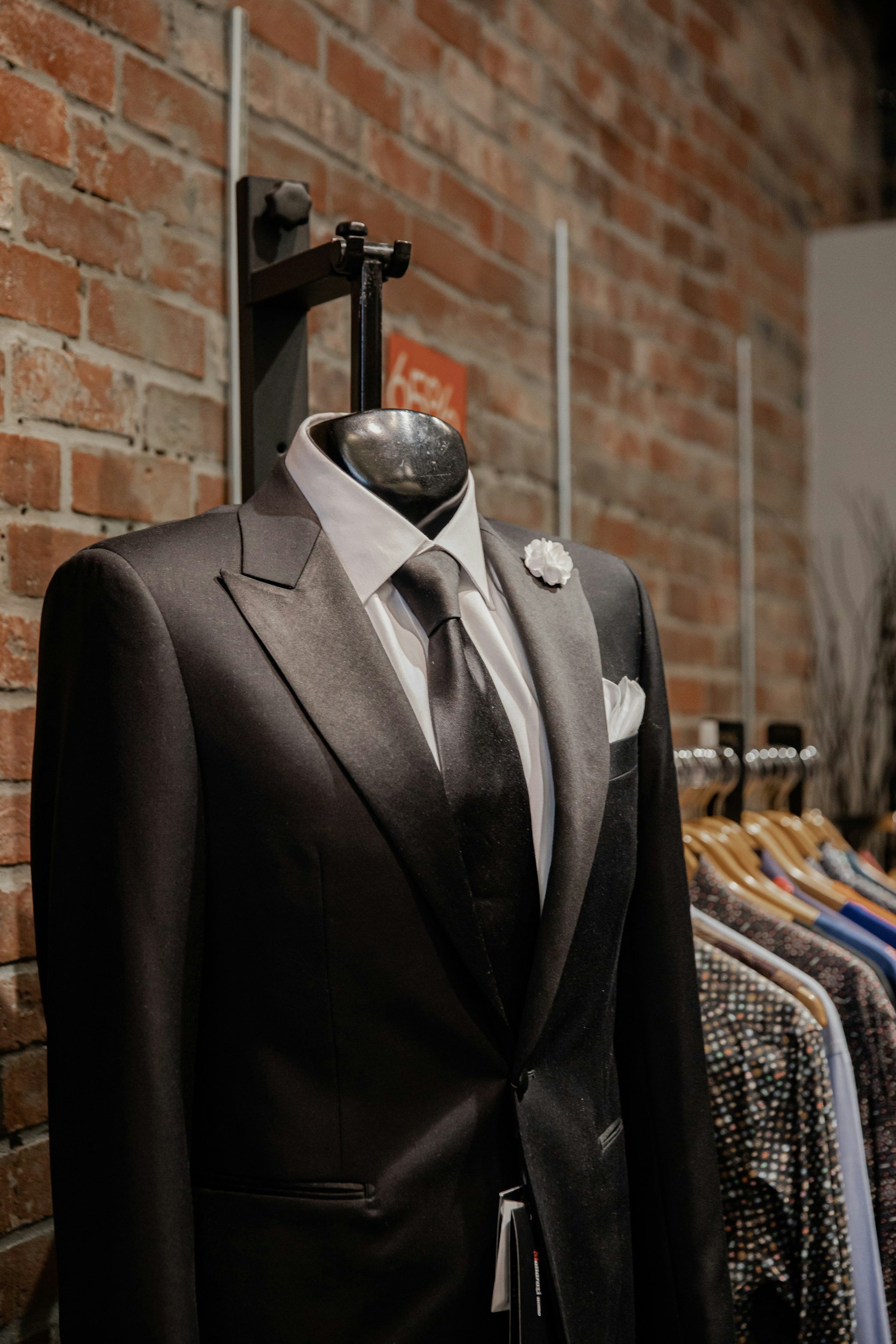
Some weddings call for black tie, and when they do, made-to-measure tuxedos are the appropriate answer. Evening ceremonies at formal venues, celebrations explicitly designated black tie, and events where the couple wants maximum elegance all warrant this level of dressing. The question isn’t whether to wear a tuxedo—it’s whether to wear one that was made for you or one that wasn’t.
Traditional black tie elements—midnight blue or black barathea wool, silk-faced lapels, covered buttons, formal trouser striping—produce results that don’t date. Made-to-measure tuxedos bring impeccable fit to these timeless elements, which is what separates authentic formal wear from what a costume approximation looks like in photographs twenty years later.
Lapel style is worth considering carefully. Peak lapels project authority and formality—a popular choice for grooms who want to make a strong visual statement. Shawl collars offer softer elegance and suit a wider range of frames. Notch lapels, while technically permissible in black tie, carry a business-suiting association that works against the celebratory context. The right choice depends on face shape, build, and the overall aesthetic the groom and couple are going for.
Made-to-measure tuxedos justify their investment well beyond the wedding day. Formal occasions accumulate through a successful professional and social life—galas, awards evenings, New Year’s celebrations, charity events. Northern Utah’s formal venues, from Grand America’s ballrooms to the mountain resort lodges around Park City and Sundance, host these events regularly. Owning a tuxedo that actually fits means being genuinely prepared for all of them.
Premium Wedding Suits for Men: What Separates Good from Exceptional
Premium wedding suits for men distinguish themselves through a combination of fabric quality, construction method, and the attention paid to details that most people never consciously notice—but that register in every photograph. Understanding these differences makes it easier to evaluate options and ask the right questions.
Fabric quality starts with fiber. The Super number system—Super 110s, Super 120s, Super 150s—measures wool fiber fineness in microns. Higher numbers mean softer, finer cloth with a luxurious hand feel, though they also mean more delicate fabric. For wedding attire that will be worn actively through a long day of photographs, ceremony, and celebration, a robust Super 120s often outperforms an ultra-fine Super 170s in practical terms. The goal is a fabric that looks and feels extraordinary while holding up through the actual demands of the day.
Construction method matters as much as fabric. Full canvas construction—where a horsehair canvas is hand-stitched between the outer fabric and lining—allows the jacket to mold gradually to the wearer’s body, improving fit over time. Half-canvas preserves this benefit in the chest area at a lower cost. Fused construction, which bonds an adhesive interfacing to the fabric, produces a stiffer feel and tends to deteriorate faster. Premium wedding suits for men almost always use full or half canvas construction.
The finishing details are where exceptional suits reveal themselves: functioning buttonholes on the jacket sleeve, pick-stitching along lapels, horn buttons, a cleanly finished interior. These elements reward close examination in portrait photographs while contributing to overall longevity.
Coordinating the Groom with the Wedding Party
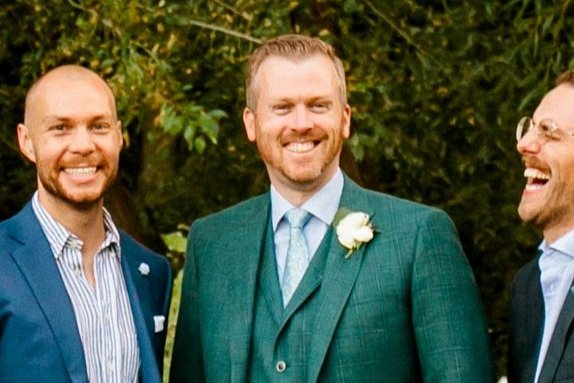
The groom needs to stand apart visually while remaining connected to the wedding party—a balance that’s harder to achieve than it sounds. The custom tailoring consultation is the right place to think through this coordination, since it allows for intentional choices rather than reactive ones.
Common approaches include the groom wearing a different fabric shade within the same color family, incorporating a waistcoat or texture details that groomsmen don’t have, or selecting a premium version of a similar style. A navy groom’s suit in a subtle herringbone texture reads as distinctly different from solid navy groomsmen attire without creating visual chaos in group photographs. A grey celebration might distinguish the groom through a checked waistcoat while groomsmen wear solid grey.
Details matter in portraits even when they blend at distance. Different boutonniere styles, a unique tie pattern, a distinctive pocket square treatment—these elements reward close examination in portrait photographs while maintaining visual harmony in wider group shots.
It’s also worth noting that made-to-measure options for groomsmen produce noticeably better results than renting across different body types. The uneven, slightly-off appearance common in wedding party rental photographs disappears when every person is wearing something that was actually made for them. Groomsmen may not need the full level of customization the groom receives, but the improvement over rentals is immediate and visible.
Northern Utah Weddings: Venue, Season, and What They Mean for Attire
Utah weddings cover remarkable variety—temple ceremonies requiring modest reverence, mountain venues where rustic elegance fits naturally, downtown Salt Lake events that call for urban sophistication, and destination-style celebrations at resorts from Park City to Sundance. Each context shapes what appropriate attire looks and feels like, which is exactly why the custom consultation process matters so much.
Temple ceremonies call for attire that balances reverence with celebration. Conservative cuts, quality construction, and thoughtful color choices honor the occasion while leaving the groom looking polished for reception festivities afterward. Many grooms change between ceremony and reception; others prefer selecting a versatile suit that works well in both contexts—a choice that’s easier to execute when fabric weight and color are chosen deliberately.
Mountain and outdoor venues present their own set of considerations. Summer evenings cool quickly at elevation—fabrics with enough weight to remain comfortable once the sun drops are worth prioritizing. Outdoor light also behaves differently than indoor lighting: fabrics that read beautifully inside can look flat outside, while textured weaves gain real dimensionality in natural light. This is a detail worth discussing specifically during fabric selection.
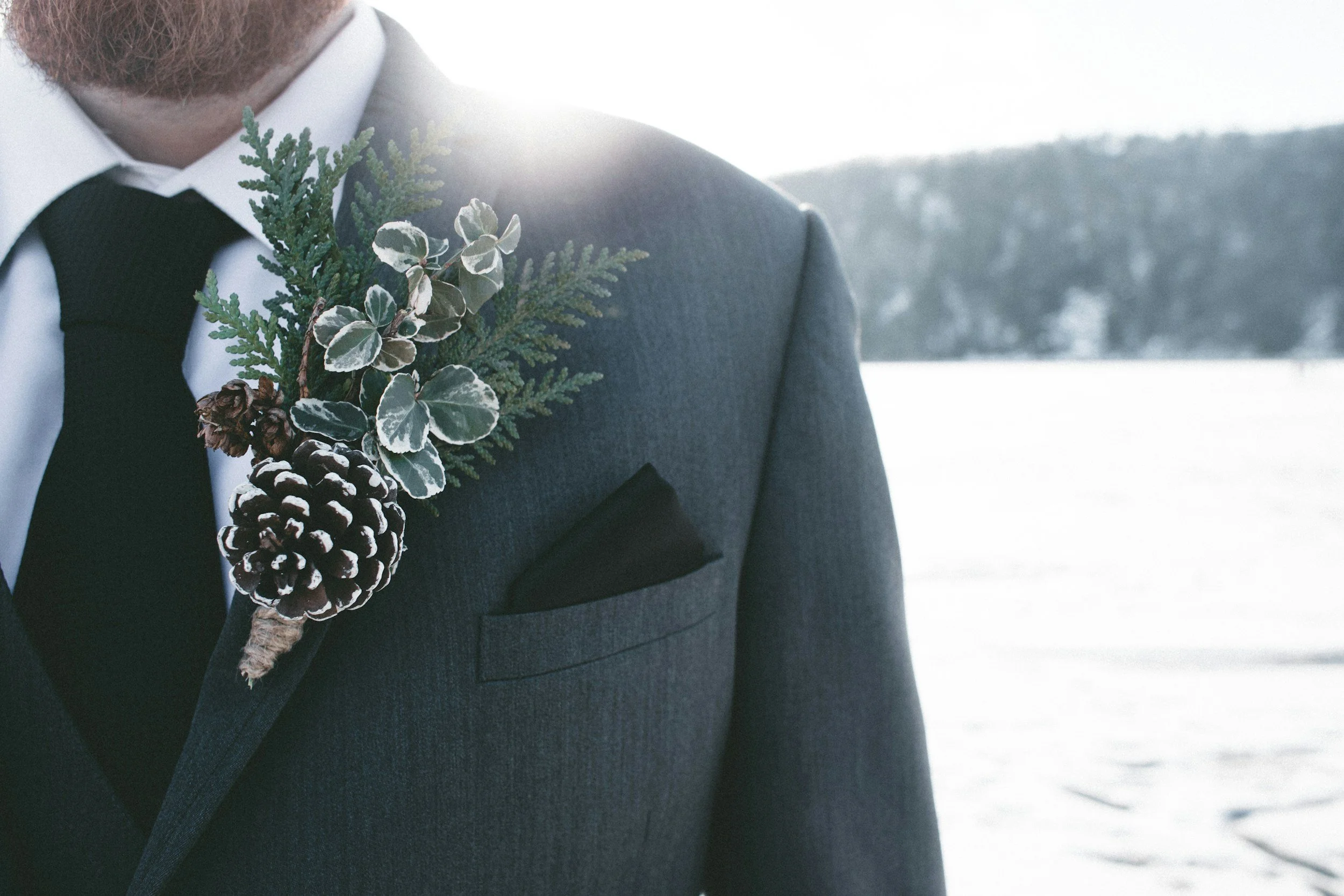
Winter weddings along the Wasatch Front require practical thinking. Wool weights appropriate for December differ significantly from June selections. Moving between heated interiors and snowy exteriors puts real demands on fabric wrinkle resistance. Color choices should also account for how a suit photographs against potential snow backgrounds or mountain scenery—a factor that rarely comes up in generic style advice but matters considerably here.
Making the Decision: Where to Start
The most important practical step is starting early. Eight to twelve weeks is the baseline for made-to-measure suits for weddings, and that window can extend if adjustments are needed or if the wedding falls during a busy season. Grooms who begin the process with time to spare have the full range of fabric and customization options available; those who start late are negotiating compromises before the first measurement is taken.
Beyond timing, the quality of the consultation matters enormously. Look for a retailer who asks specific questions about the wedding before offering recommendations—venue, time of day, season, coordination requirements with the wedding party. Vague answers about fabric and construction are signals worth taking seriously. The best retailers in this space treat the process as a genuine collaboration, not a transaction.
Whether the final choice is a classic suit for a temple ceremony, a textured fabric for a mountain reception, or made-to-measure tuxedos for a black-tie evening celebration, the result should be the same: a groom who looks genuinely himself, wearing something made for him, at one of the most photographed moments of his life. That’s an investment worth making thoughtfully.